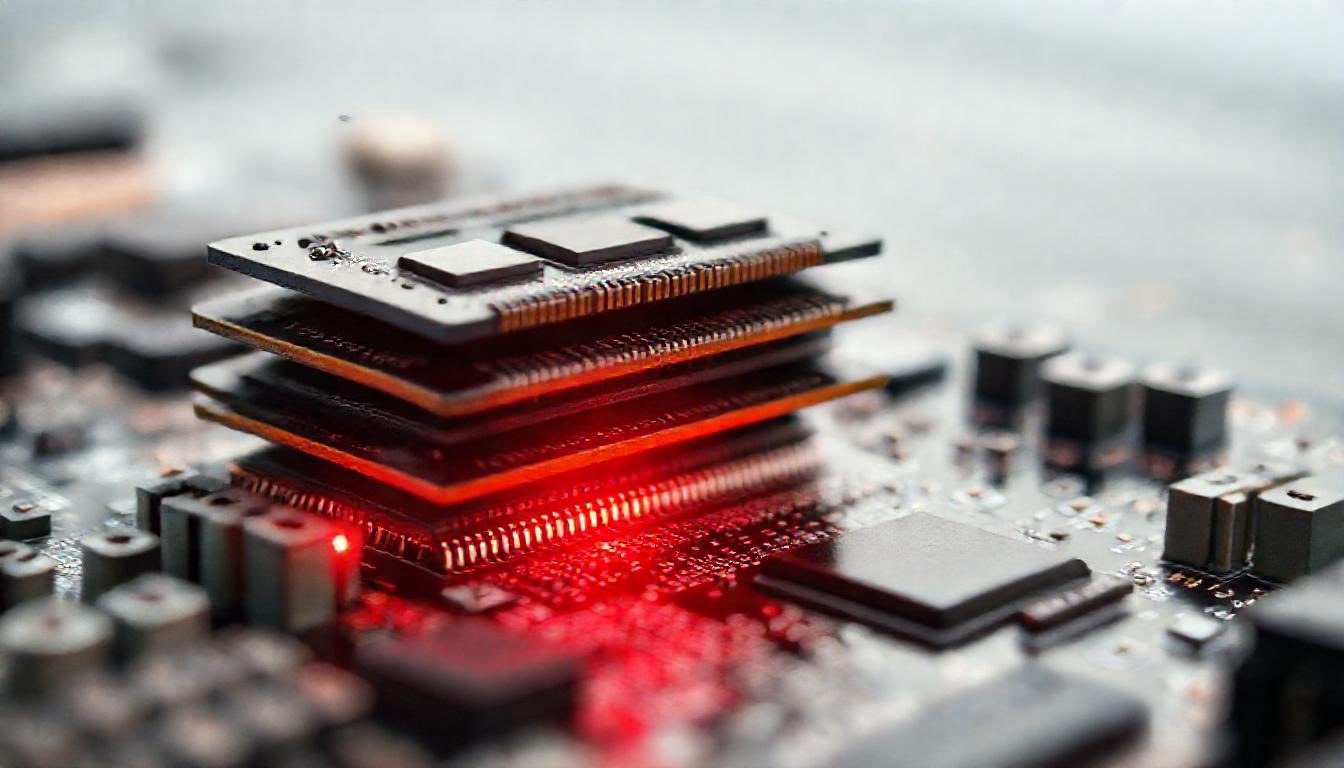
The semiconductor supply chain in mid-2026 faces a critical bifurcation in high-bandwidth memory. As artificial intelligence shifts from centralized cloud training to decentralized edge inference, the choice between LPDDR5X vs GDDR7 emerges as a pivotal metric for hardware efficiency and investor valuation. While GDDR7 remains the standard for discrete graphics and specialized compute modules prioritizing raw throughput, LPDDR5X has captured the dominant share of mobile and edge computing silicon due to its superior LPDDR5X power efficiency.
Why LPDDR5X Power Efficiency Matters for Edge AI
For U.S. tech companies deploying AI at the edge, energy consumption is no longer just an operational cost; it is a regulatory compliance issue and a battery-life constraint. LPDDR5X vs GDDR7 comparisons reveal fundamental architectural differences. GDDR7, an evolution of GDDR6, utilizes a differential signaling architecture optimized for high clock speeds and large data bursts. It is ideal for stationary workloads where power delivery is abundant, such as data center GPUs or high-end workstations.
Conversely, LPDDR5X vs GDDR7 dynamics highlight LPDDR’s advantage in mobile contexts. LPDDR5X uses single-ended signaling and operates at lower voltage levels, significantly reducing heat dissipation. In 2026, with thermal thresholds tightening in compact AI appliances, the ability to pack more compute into smaller form factors without throttling makes LPDDR5X power efficiency the default for smartphones, laptops, and automotive AI systems. Investors tracking semiconductor stocks must recognize that while GDDR7 commands higher absolute bandwidth per pin, LPDDR5X offers better bandwidth-per-watt, a crucial metric for the growing edge AI market.
Cost Structures and Supply Chain Implications
The manufacturing complexity of these memory types affects pricing models for chipmakers like Micron, SK Hynix, and Samsung. GDDR7 production yields have stabilized, but the transition to advanced nodes remains capital-intensive. LPDDR5X, while newer in its specific iteration, benefits from mature high-volume production lines in consumer electronics. This scale often results in lower unit costs for LPDDR5X when deployed in high-volume consumer AI devices, whereas GDDR7 components are typically priced at a premium due to their specialized use in high-performance computing.
| Feature | LPDDR5X | GDDR7 |
|---|---|---|
| Primary Use Case | Mobile, Edge AI, Laptops | Discrete GPUs, Data Centers |
| Power Efficiency | High (Low Voltage) | Moderate (High Throughput) |
| Bandwidth Density | High per watt | High absolute bandwidth |
| Cost Per GB | Lower at scale | Premium |
How Will This Affect US Semiconductor Investments?
Volatility in demand for LPDDR5X vs GDDR7 reflects broader trends in the semiconductor cycle. As hyperscalers continue to build out AI infrastructure, GDDR7 demand remains robust for inference servers. However, the explosive growth of AI PCs and autonomous vehicles drives a parallel surge in LPDDR5X power efficiency adoption. U.S. firms specializing in fabless chip design must navigate dual supply chains, securing capacity for both memory types to avoid bottlenecks.
Analysts estimate that by Q4 2026, the combined addressable market for high-performance memory will exceed $150 billion globally, with a significant portion attributable to U.S. design patents and domestic production incentives under the CHIPS Act. Investors should monitor capacity expansion announcements from major fabs, as misalignment between memory supply and processor launch dates can impact quarterly earnings for integrated device manufacturers.
For official data and guidance on this topic, see Semiconductor Industry Association.
Read also: Liquid Cooling Mandate: Solving Data Center Power Density · Neocloud Capacity: Megawatts Over Chips for AI
Key Takeaways
- LPDDR5X dominates edge AI due to superior LPDDR5X power efficiency and lower thermal output.
- GDDR7 remains critical for high-performance discrete computing and data center GPUs.
- Supply chain stability depends on balancing production capacity for both memory standards.
- U.S. investors should watch for demand spikes in AI PCs impacting LPDDR5X pricing.
- Cost-per-bit metrics favor LPDDR5X in high-volume consumer applications.


Comments (3)