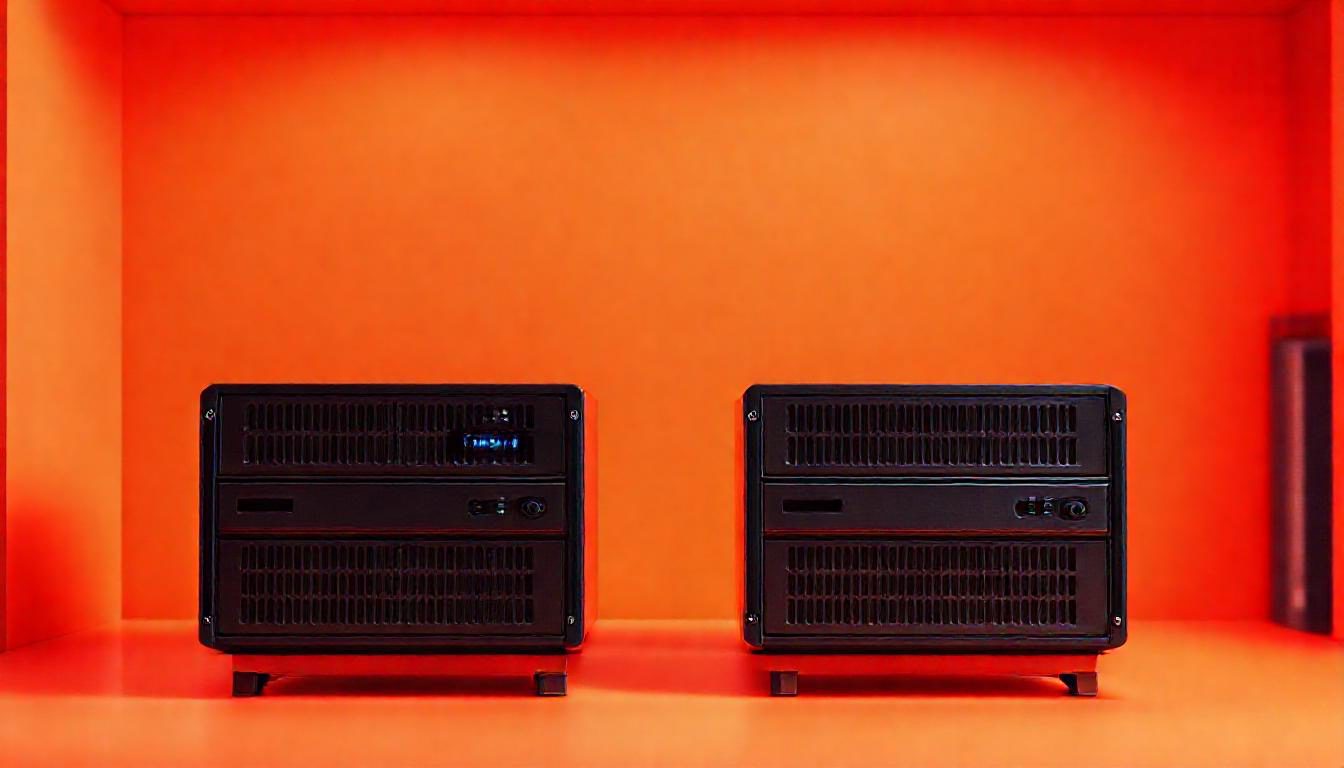
The fourth quarter of 2026 promises to be a pivotal period for the U.S. technology sector, defined less by consumer gadget releases and more by the intense internal mechanics of cloud infrastructure. As hyperscalers race to deploy the latest generations of generative AI models, the focus has shifted from raw processing power to the physical AI infrastructure constraints of the environment hosting it. Understanding the current data center hardware trends is no longer optional for American entrepreneurs and investors; it is essential for navigating a market where power availability and thermal management have become the primary bottlenecks to growth.
AI Infrastructure Constraints and the Power Bottleneck
The most significant constraint facing U.S. operators today is not silicon shortage, but electrical capacity. Grid interconnection queues in major hubs like Virginia, Texas, and Ohio have stretched to multi-year timelines, forcing a strategic pivot in how new facilities are built. Operators are increasingly prioritizing sites with existing, underutilized power contracts over greenfield developments. This shift has created a secondary market for legacy industrial sites, where retrofitting existing structures for high-density compute is more capital-efficient than waiting years for new transmission lines.
Investors must recognize that power is now a real estate asset as valuable as land itself. Facilities securing 100-megawatt-plus contracts are commanding premium valuations, while those without guaranteed grid access face depressed multiples. The urgency of Q4 deployments has accelerated the adoption of on-site generation solutions, such as natural gas turbines and battery storage systems, to bridge the gap between grid capacity and immediate demand.
Memory Hierarchies Drive ROI Efficiency
While processing units grab headlines, the economics of AI training are increasingly dictated by memory architecture. High Bandwidth Memory (HBM) remains the critical chokepoint in the supply chain. For U.S. enterprises, the cost per terabyte of HBM has stabilized but remains high, incentivizing aggressive optimization of data movement. The trend this fall is toward greater integration of memory and compute, reducing the latency incurred by shuttling data between separate chips.
Key Infrastructure Shifts
- Co-Packaged Optics Adoption: Moving optics closer to the switch silicon to reduce power consumption and latency.
- Liquid Cooling Standardization: Transitioning from air to direct-to-chip liquid cooling for racks exceeding 50kW density.
- Edge Data Center Expansion: Deploying smaller, micro-data centers in suburban areas to reduce backhaul costs.
These shifts are not merely technical upgrades; they are financial imperatives. Inefficient data movement burns capital. By adopting stricter memory hierarchies, operators can extend the useful life of their existing GPU fleets, delaying the need for costly refresh cycles.
Read also: 18A Node Yield: How Intel’s 2026 Chip Revival Impacts U.S. Supply Chains · Neocloud Capacity Clause: Why Investing in AI Hardware Fails Without Power
Thermal Management as a Financial Metric
Heat density is rising faster than cooling infrastructure can adapt. The traditional computer room air conditioning (CRAC) units are obsolete for the latest AI racks. Consequently, data center hardware trends now emphasize cooling efficiency as a direct line item in profit and loss statements. Facilities that fail to implement liquid cooling solutions face thermal throttling, which degrades performance and increases the effective cost per token of AI inference.
“The ability to dissipate 100 kilowatts per rack without thermal throttling is the new benchmark for premium data center real estate.”
This reality has spawned a new class of service providers specializing in retrofitting cooling systems. For startups, partnering with these specialists is faster and cheaper than building proprietary thermal solutions. The U.S. market is seeing a surge in acquisitions of small cooling tech firms by major hardware vendors, signaling that thermal management is now a core competency, not an afterthought.
Supply Chain Localization and Risk Mitigation
Geopolitical tensions continue to influence sourcing strategies. While the CHIPS Act has bolstered domestic fabrication capacity for logic chips, packaging and testing—critical steps for advanced AI accelerators—remain concentrated overseas. However, by late 2026, we are seeing early signs of domestic advanced packaging facilities coming online. This localization is crucial for ensuring supply chain resilience.
Investors should monitor the lead times for HBM and advanced packaging. Any disruption here creates immediate volatility in the hardware market. Companies with pre-negotiated long-term supply agreements for these components are outperforming those relying on spot markets. The trend is clearly moving toward vertical integration, where major cloud providers are investing directly in upstream hardware suppliers to secure their roadmaps.
Key Takeaways
- Power Availability is King: Grid constraints are driving up the value of facilities with existing high-capacity power contracts.
- Memory Costs Matter: HBM supply and efficiency will dictate the ROI of AI infrastructure more than GPU FLOPS.
- Cooling is Essential: Liquid cooling is no longer optional for high-density racks; it is a requirement for competitive performance.
- Localizing Packaging: Domestic advanced packaging capabilities are becoming a key differentiator for supply chain security.
For official data and guidance on this topic, see NIST.
FAQ
How do power constraints affect startup cloud costs?
Startups using hyperscale cloud providers may see pricing adjustments as providers pass on higher energy and infrastructure costs. Smaller providers may face capacity limits, forcing startups to multi-cloud strategies to ensure reliability during peak Q4 demand.
What is the impact of HBM4 on current GPU investments?
While HBM4 offers greater bandwidth, integrating it into existing server designs is complex. Most current GPUs will remain viable for inference workloads, but training large models will increasingly require new hardware architectures optimized for next-gen memory allocation.
Should investors focus on software or hardware optimization?
Hardware efficiency gains are more immediately impactful on the bottom line than incremental software optimizations. Investing in infrastructure that reduces energy consumption and heat generation provides a clearer, more measurable return on investment in the current market environment.


Comments (1)