
From Liability to Asset: The Shift in Mining Economics
For years, bitcoin miners operated under a binary economic reality: their primary product was digital currency, and their primary byproduct—massive amounts of waste heat—was a liability. The cost of dissipating this heat often matched or exceeded the energy input, creating an operational ceiling for efficiency. However, the landscape in 2026 has shifted dramatically. With new federal tax credits for green infrastructure and updated Department of Energy guidelines, converting waste heat into usable energy for district heating, industrial processes, or agriculture is no longer just a public relations maneuver. It is a core component of profitability. This transition is reshaping how institutional investors view the sector, moving bitcoin miners from speculative tech plays to integrated energy utilities with diversified revenue streams.
How Federal Incentives Changed the Game
The U.S. government’s recent push to decarbonize heavy industry has inadvertently created a favorable environment for crypto infrastructure. The Investment Tax Credit (ITC) extensions and new grants for combined heat and power (CHP) systems have lowered the capital expenditure barrier for bitcoin miners looking to install heat recovery systems. Previously, retrofitting a mining facility to capture heat required significant upfront costs with uncertain payback periods. Now, federal subsidies cover a substantial portion of the installation costs, and the ability to sell thermal energy provides immediate cash flow.
This policy alignment has accelerated the adoption of liquid cooling and heat exchange technologies. Bitcoin miners are increasingly partnering with local municipalities to provide heating for residential areas or with industrial farms to supply heat for greenhouses. The result is a dual-revenue model: one from the sale of block rewards and another from thermal energy contracts. For investors, this reduces reliance on the volatile price of Bitcoin, offering a hedge that was previously unavailable in the crypto sector.
The Impact on Local Grids and Communities
The integration of bitcoin miners into local energy ecosystems is also addressing long-standing tensions with grid operators. In regions like Texas, Georgia, and Kentucky, mining facilities have often been viewed as burdens on the power grid, driving up prices for residential consumers during peak demand. By monetizing waste heat, these facilities are transforming into community assets. They are providing reliable thermal energy that reduces the need for natural gas consumption in neighboring buildings, thereby lowering overall community carbon footprints.
Furthermore, the flexibility of bitcoin miners to curtail operations during grid emergencies (demand response) remains a critical value proposition. Recent data suggests that miners participating in both demand response programs and heat-selling contracts have improved their net profit margins by an estimated 15–20% compared to traditional facilities. This dual capability makes them attractive to grid operators, who are increasingly willing to offer preferential rate structures to industrial partners that can support grid stability while also contributing to local heating needs.
Operational Challenges and Infrastructure Requirements
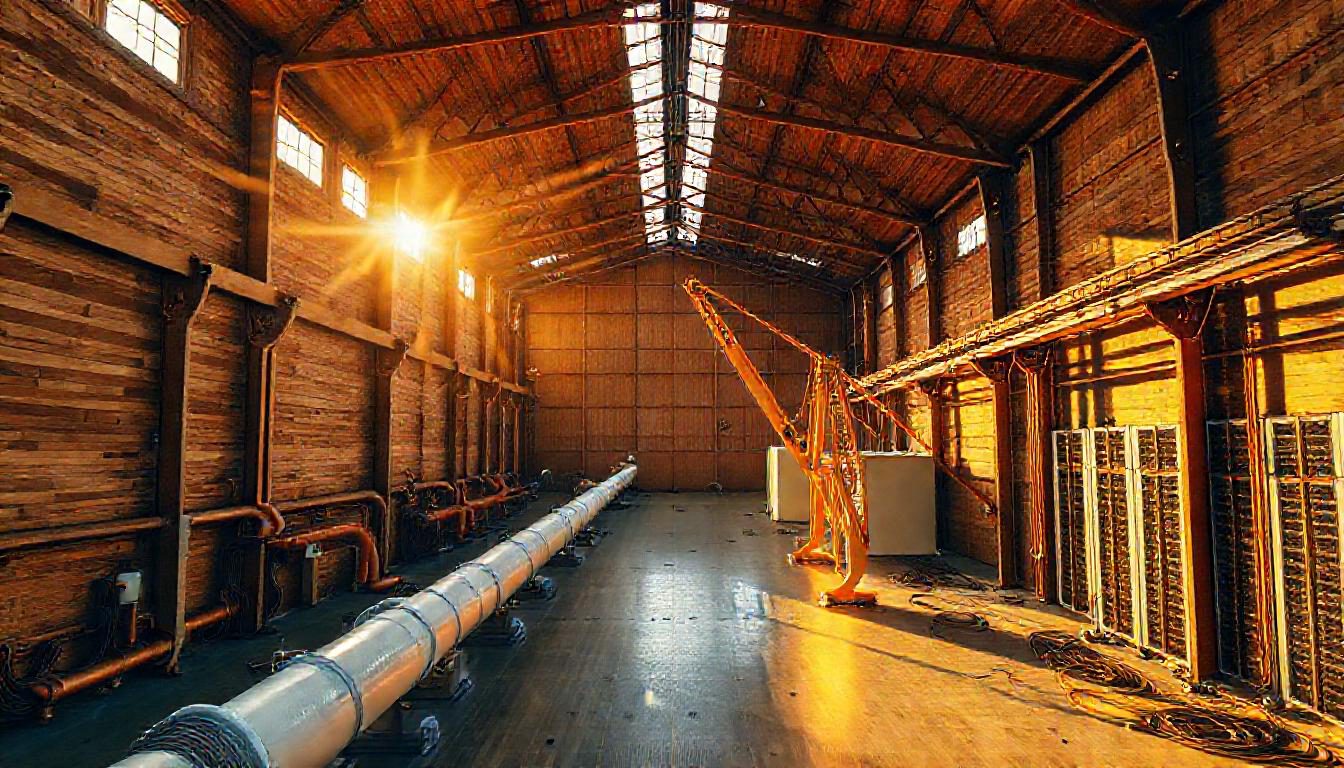
Despite the economic upside, transitioning to a heat-selling model introduces significant operational complexity. Bitcoin miners must now manage two distinct product lines: digital assets and thermal energy. This requires specialized staff, maintenance protocols, and insurance coverage. The infrastructure for heat transport—such as insulated piping networks—is expensive to build and maintain, and any leakage or inefficiency can erode profit margins.
Moreover, the regulatory landscape for selling heat is still evolving. While federal tax incentives are clear, local zoning laws and utility regulations can vary widely. Some municipalities have been slow to adopt frameworks that allow private entities to sell heat directly to consumers, creating bottlenecks for expansion. Bitcoin miners must navigate this regulatory patchwork carefully, often requiring legal counsel and local government liaisons to secure permits and contracts.
“The ability to monetize waste heat transforms bitcoin mining from an energy sink into an energy utility, fundamentally altering risk profiles for institutional capital.”
Investor Outlook: Valuation Shifts and ESG Appeal
For institutional investors and private equity firms, the shift toward heat monetization is redefining valuation metrics for bitcoin miners. Traditional multiples based solely on hash rate and electricity costs are being supplemented by metrics that account for thermal revenue and ESG (Environmental, Social, and Governance) compliance. Funds focused on sustainable infrastructure are increasingly allocating capital to mining operators who can demonstrate a verified heat-selling model.
This ESG alignment is crucial as global capital markets tighten standards for carbon-intensive industries. Bitcoin miners that successfully integrate heat recovery are better positioned to attract long-term institutional money that might otherwise avoid the sector due to environmental concerns. The diversification of revenue also mitigates the risk of a sharp Bitcoin price decline, making these operators more resilient in bear markets.
Future Scenarios: The Role of AI and Grid Integration
Looking ahead, the synergy between bitcoin miners and AI data centers is becoming more pronounced. Both sectors require massive power inputs and generate significant heat. While AI currently commands higher energy prices, mining operators are exploring hybrid models where infrastructure can switch between mining and AI inference tasks based on market conditions, all while selling heat to the local grid. This flexibility could further stabilize earnings.
Additionally, as the Federal Reserve explores digital infrastructure pilots, the role of secure, energy-efficient facilities like those operated by forward-thinking miners may become more relevant. The focus is less on speculation and more on building robust, dual-purpose infrastructure that serves both digital and physical energy needs.
Key Takeaways
- Revenue Diversification: Bitcoin miners are now generating significant income from selling waste heat, reducing dependence on Bitcoin price fluctuations.
- Federal Support: New U.S. tax credits and grants for green infrastructure have lowered the cost barriers to implementing heat recovery systems.
- Grid Stability: Heat-selling miners are becoming valuable partners for local grids, offering both demand response and thermal energy solutions.
- ESG Appeal: The shift to integrated energy utilities makes bitcoin miners more attractive to institutional investors with strict ESG mandates.
FAQ
What is the primary benefit of selling heat for bitcoin miners?
The primary benefit is turning a costly waste product into a revenue stream, which diversifies income beyond Bitcoin block rewards and improves overall profit margins.
How do federal tax credits support this industry shift?
Federal tax credits, such as the Investment Tax Credit, subsidize the high upfront costs of installing heat recovery and transport infrastructure, making the transition economically viable for operators.
Does selling heat impact the security of the blockchain?
No, selling heat does not impact blockchain security. It is a physical infrastructure optimization that captures thermal energy generated during the proof-of-work consensus process without altering the digital algorithm.
Are all bitcoin miners capable of selling heat?
Not all. It requires specific infrastructure, proximity to end-users (like cities or farms), and local regulatory approval, making it most feasible for miners in cold climates or near industrial zones.
Read also: Crypto Tax Loss Harvesting: A Q3 Strategy for U.S. Investors · Cross-Chain Crypto Custody: How SEC Compliant Path Fits U.S. Investors
For official data and guidance on this topic, see U.S. Securities and Exchange Commission.



Comments (1)