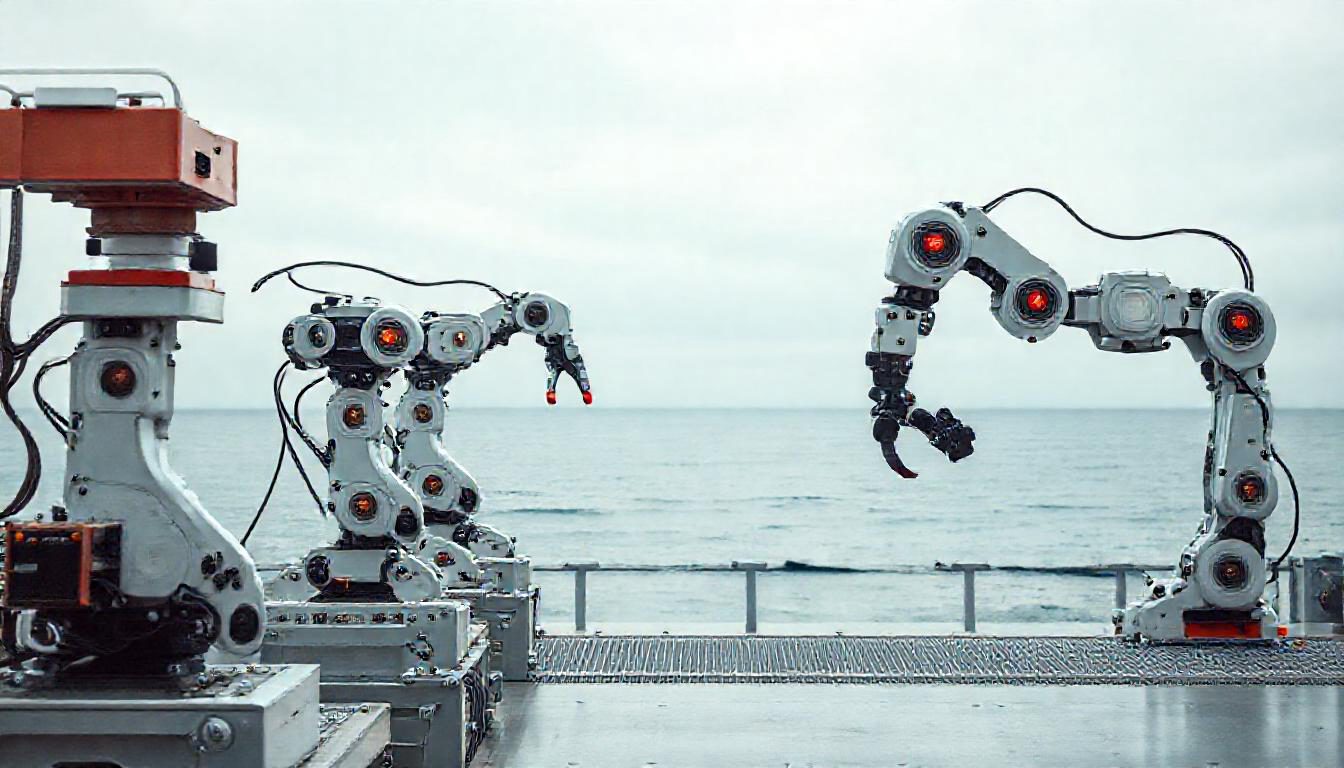
While Washington analysts obsess over large language model safety and chip supply chains, a parallel regulatory vacuum is forming in the physical world. The current federal policy on artificial intelligence is primarily tailored to digital software, leaving autonomous robotics—systems that interact directly with human bodies and infrastructure—largely unregulated. For venture capital firms deploying billions into humanoid robots and automated logistics, these robotics regulation gaps represent a significant, underpriced risk.
The Governance Gap: Robotics Regulation Gaps in Physical AI
The Federal AI Act and related executive orders concentrate their scrutiny on algorithmic bias, data privacy, and model transparency. These are valid concerns for software, but they do not translate well to hardware. A humanoid robot operating a warehouse or assisting in elderly care does not just process data; it exerts physical force. Current regulations do not mandate the same rigorous safety certifications for autonomous physical agents that the Food and Drug Administration (FDA) requires for medical devices or that the Occupational Safety and Health Administration (OSHA) enforces for industrial machinery.
This creates a dangerous liability blind spot. If a language model hallucinates, the result is misinformation. If a neural network controlling a robotic arm fails, the result is a crushed limb. The regulatory framework is not designed to handle the latter, leaving companies to navigate a patchwork of state tort laws and internal standards that vary wildly by jurisdiction. These robotics regulation gaps are widening daily.
Liability Landmines for Robotics Startups
For entrepreneurs in Silicon Valley and Boston, the lack of clear federal guidance on neural network capacity limits in safety-critical robotics creates an existential legal threat. Without a unified standard for “safe” operation, companies face the prospect of grieving families suing over unpredictable behavior in home-assistive robots or hospital logistics bots. The robotics regulation gaps here are particularly acute.
Consider the insurance implications. Lloyd’s of London and major U.S. carriers are struggling to price policies for autonomous humanoids because they lack historical loss data. This uncertainty drives up premiums, squeezing margins for startups that are already burning cash on hardware development. Investors are wary of backing companies that could be sued into bankruptcy by a single malfunctioning unit due to these robotics regulation gaps.
The Fragmented Landscape
Currently, safety oversight is fragmented:
- OSHA: Focuses on worker safety but lacks jurisdiction over consumer-facing autonomous agents.
- CPSC: The Consumer Product Safety Commission oversees physical products but has no expertise in AI-driven decision-making loops.
- State Laws: California and Texas are beginning to draft their own AI liability statutes, but these are inconsistent and often preempted by federal commercial code in interstate commerce.
Read also: Neural Network Scaling: Why Diminishing Returns Hit Wall Street · Neural Network Consolidation: 5 Signs of AI M&A
Impact on U.S. Supply Chains and Labor Markets
The robotics industry is not just a tech story; it is a labor story. With the U.S. facing a structural shortage of 1 million warehouse workers, companies like Amazon and Tesla are betting big on automation. The neural network capacity required to navigate complex, unstructured human environments is the bottleneck. However, the regulatory hesitation slows down deployment. Companies are forced to keep humans in the loop for legal protection, negating the efficiency gains of full autonomy. These robotics regulation gaps hinder progress.
This delay has macroeconomic consequences. If the U.S. cannot deploy safe autonomous robots quickly due to regulatory ambiguity, manufacturing capacity may shift to jurisdictions with clearer, albeit potentially laxer, rules. China, for example, has moved aggressively to standardize industrial robot safety protocols, giving its manufacturers a first-mover advantage in global logistics. The robotics regulation gaps in the West are a strategic disadvantage.
Policy for Neural Network Capacity
Analysts estimate that it will take at least three to five years for Congress to pass a comprehensive robotics liability act. In the interim, the U.S. Department of Commerce and the National Institute of Standards and Technology (NIST) are developing voluntary frameworks for “trustworthy AI” in physical systems. However, voluntary frameworks rarely shield companies from punitive damages in court. The robotics regulation gaps remain open.
Investors should treat regulatory uncertainty as a core risk factor in any robotics due diligence process.
For venture capitalists, this means favoring companies with conservative safety architectures over those pushing for maximum autonomy at all costs. The winners in this space will not be the ones with the smartest models, but the ones with the most defensible liability shields against robotics regulation gaps.
For official data and guidance on this topic, see NIST AI Risk Management Framework.
Key Takeaways
- Regulatory Mismatch: Current U.S. AI laws focus on digital risks, ignoring the physical safety threats posed by autonomous robotics. These robotics regulation gaps are critical.
- Liability Vacuum: The absence of federal standards for neural network capacity in safety-critical hardware creates unpredictable legal risks for startups and insurers.
- Investment Strategy: VCs should prioritize robotics firms with robust human-in-the-loop systems and strong legal compliance teams over those pursuing full autonomy.
- Global Competitors: Regulatory hesitation in the U.S. may allow foreign competitors with clearer safety protocols to dominate the global robotics supply chain.
- Actionable Advice: U.S. robotics companies should actively participate in NIST working groups to shape emerging standards before they become mandatory, addressing robotics regulation gaps.



Comments (4)