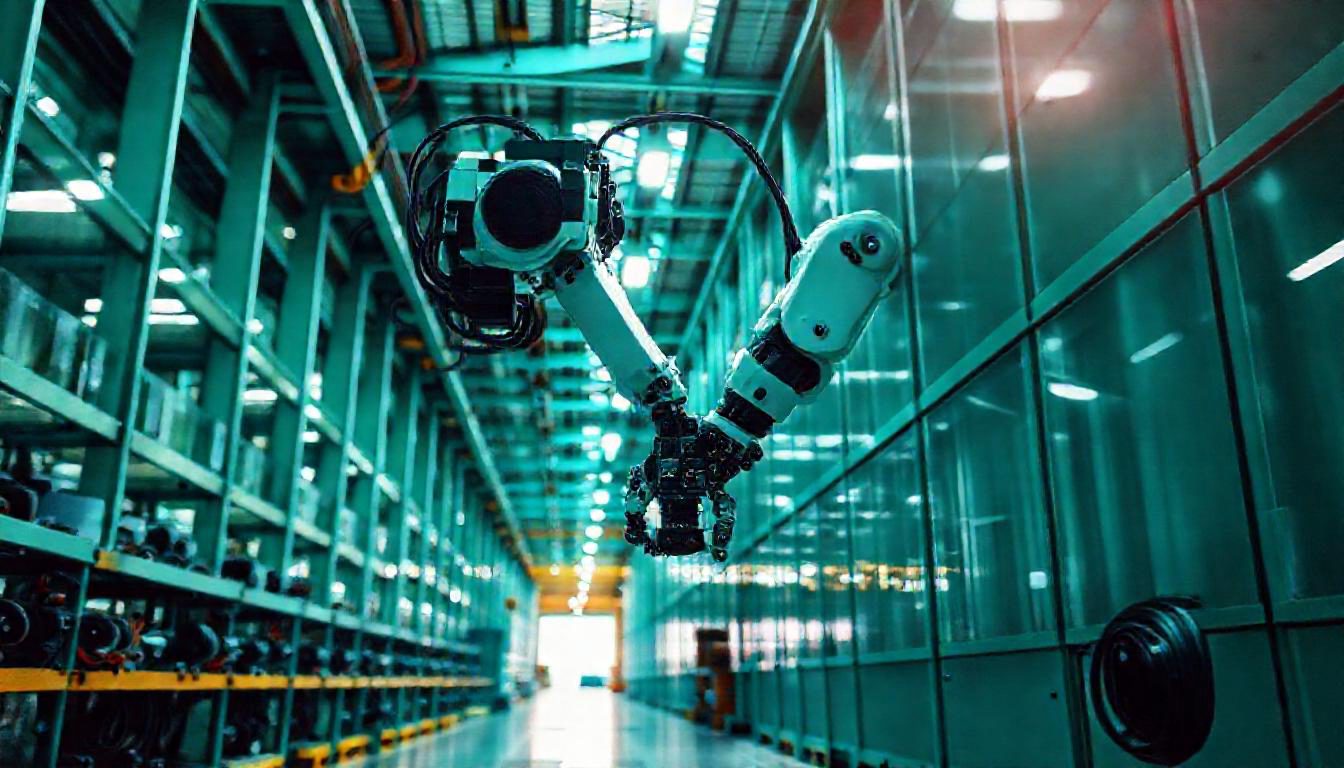
The integration of artificial intelligence into physical machinery has long promised a productivity revolution, but the legal framework remains dangerously incomplete. Heading into Q4 2026, the Federal AI Act Impact is exposing a critical certification vacuum for autonomous systems. Unlike software-only models, robotics interacts directly with human workers and public spaces, raising liability stakes that current compliance templates simply cannot address. This mismatch creates a distinct risk profile for investors and startups alike.
Why the Federal AI Act Impact Creates Liability Cliffs
The core issue lies in the distinction between cognitive AI and embodied agency. The Federal AI Act Impact, as interpreted through recent SEC guidance and early litigation trends, treats algorithmic output as a data product. However, when an LLM controls a robotic arm, the output is kinetic. If a warehouse robot miscalculates a movement due to a hallucinated spatial map, the result is physical injury or property damage.
Most U.S. manufacturers rely on third-party neural networks for perception and planning. The gap arises when these third-party models are updated. A silent version change in a vendor’s LLM could alter a robot’s decision-making logic, pushing it out of compliance with its previous safety certification. Without mandatory, real-time regulatory audits for embodied AI, companies face a “liability cliff.” Investors should anticipate that any robotics firm without a proprietary, closed-loop verification system will face higher discount rates in the coming months.
The Certification Vacuum and Verification Bottleneck
This is not merely a legal theory; it is an operational bottleneck. Current FAA protocols for drones offer a poor analog for ground-based autonomous systems. The Federal AI Act Impact fails to specify the hardware-software handshakes required for safe operation. Consequently, many U.S. firms are deploying “shadow AI” in their production lines—systems that use unverified language models to optimize movement paths without full regulatory disclosure.
“The market is pricing in perfection, but the law prices in negligence. The delta between the two is where the next correction lives.”
Key Risk Factors for Q4 2026
- Vendor Lock-in Risks: If a primary AI vendor shifts its model weights, certified robots may become non-compliant overnight.
- Insurance Premiums: Actuarial data is sparse for embodied AI, leading to punitive insurance costs for early adopters.
- Intellectual Property Conflicts: The Federal AI Act Impact does not clearly define who owns the “reasoning trace” of a robot that fails, creating discovery chaos in litigation.
Read also: LLM Hallucinations: 5 Steps to Mitigate AI Errors · Neural Network Compliance: Navigating the Federal AI Act
Investor Outlook and Strategic Adjustments
For venture capitalists and public equity holders, the Federal AI Act Impact serves as a filter for quality. Companies that have engineered rigid, deterministic fail-safes independent of the neural network are insulated from the worst of the regulatory uncertainty. Conversely, firms relying entirely on end-to-end learning models are high-risk plays.
In the short term, expect a bifurcation in the robotics sector. Large-cap players like Nvidia and Tesla can absorb compliance costs and legal ambiguity. Mid-market firms, however, may see delayed IPOs or down-round financings as due diligence reveals the extent of their exposure to the Federal AI Act Impact. Smart money is moving toward “AI-augmented” robotics—where humans retain final actuation authority—rather than fully autonomous systems. This approach minimizes regulatory surface area while maintaining efficiency gains.
For official data and guidance on this topic, see NIST AI Risk Management Framework.
Key Takeaways
- The Federal AI Act Impact creates a certification gap for embodied AI, increasing legal liability for physical errors.
- Silent model updates from third-party vendors pose a compliance risk for certified robotic systems.
- Investors should favor companies with deterministic safety layers over those relying solely on neural network outputs.
- Insurance and litigation costs for autonomous systems will likely spike as early cases set precedents in late 2026.



Comments (1)