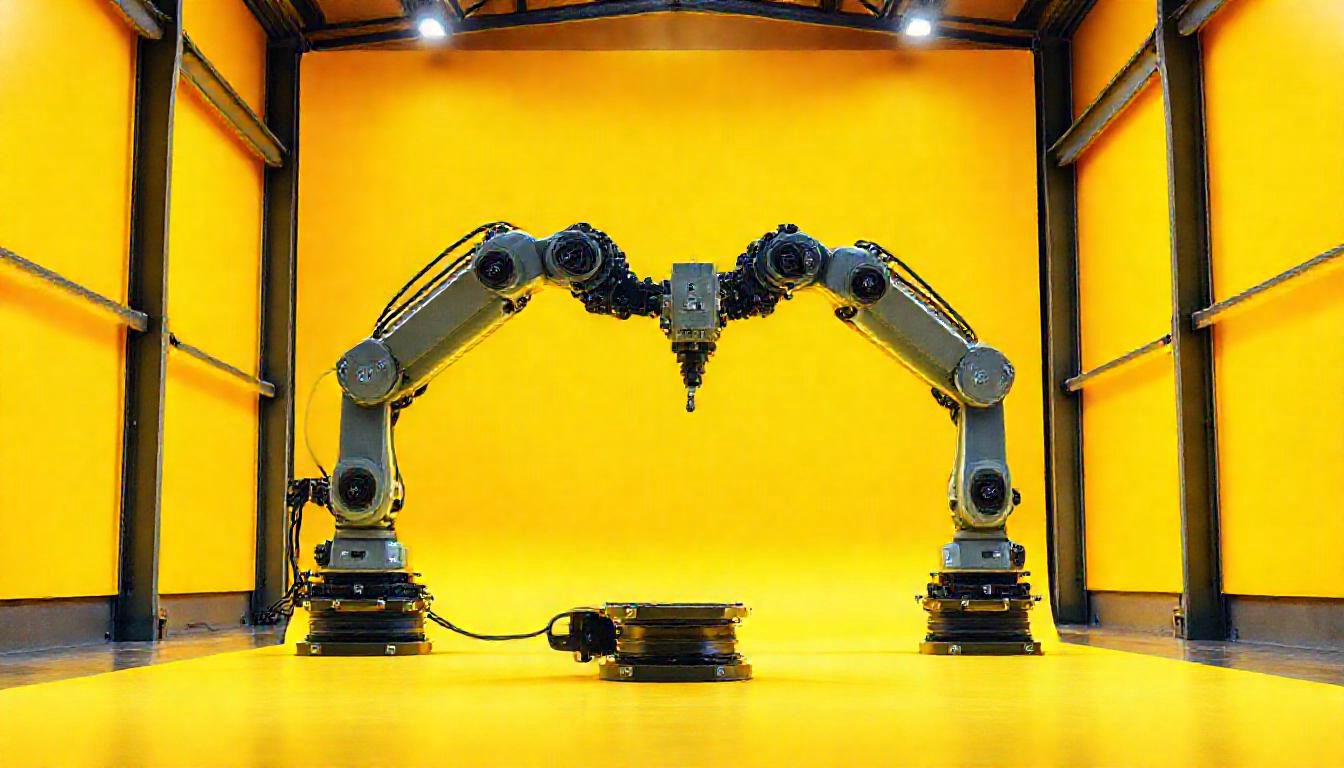
The hype cycle for artificial intelligence has officially jumped from software interfaces to physical execution. While the early years of the generative AI boom were defined by large language models serving as digital assistants, late 2026 marks a pivotal shift toward the integration of neural network actuation into industrial robotics. For American investors and entrepreneurs, the opportunity is no longer just in the code that thinks; it is in the mechanics that do. Understanding these robotics vc trends is essential for navigating this new landscape.
The Convergence of Software and Steel
Investors have spent the last few years funding companies that build better chatbots. Now, the focus is rotating toward hardware that can interact with the physical world with unprecedented precision. This transition represents a fundamental change in value proposition. Previously, robotics startups struggled with rigid, pre-programmed instructions that failed to adapt to variable environments. Today, neural network actuation allows machines to learn complex motor skills in real-time, reducing the need for costly human reprogramming.
For U.S. manufacturers, this means higher throughput and lower error rates. Companies like Tesla and Figure AI are leading this charge, but the ripple effects are touching traditional industrial giants such as Caterpillar and John Deere. These firms are integrating AI-driven actuators into their supply chains to mitigate labor shortages, a persistent headache for American businesses since the post-pandemic reopening. The economic logic is straightforward: if a robot can teach itself to weld or assemble without extensive coding, the return on investment timeline shrinks from years to months. These dynamics are central to current robotics vc trends.
Robotics VC Trends: Neural Network Actuation for U.S. Investors
The financial implications of this shift are profound. Public markets are reassessing valuations not just on software-as-a-service metrics, but on hardware durability and AI adaptability. Venture capital firms are increasingly bifurcating their portfolios, separating pure-play AI software from embodied AI. Investors must understand that neural network actuation is not merely a feature update; it is a platform shift comparable to the move from desktop to mobile computing. This distinction is a key component of emerging robotics vc trends.
Key sectors benefiting from this trend include:
- Precision Manufacturing: Where tolerances are measured in microns.
- Logistics and Warehousing: Facing pressure to automate last-mile delivery.
- Healthcare Robotics: Assisting in surgeries and patient care with AI-guided precision.
- Defense Contractors: Producing autonomous systems for surveillance and combat support.
Wall Street analysts estimate that the embodied AI market could reach hundreds of billions in revenue by the early 2030s. However, volatility is expected. Early adopters face integration costs, and legacy firms risk obsolescence if they fail to pivot. For the average investor holding a 401(k), this means tech-heavy indices may see increased turbulence as capital rotates from pure software plays to mixed asset classes involving robotics and semiconductors. These shifts define the current robotics vc trends.
Read also: Neural Network Architecture Selection for SaaS Unit Economics · Neural Network Reasoning: How Chain-of-Thought Transforms Enterprise AI
Regulatory and Supply Chain Headwinds
Despite the optimism, significant barriers remain. The U.S. Federal Trade Commission and other regulatory bodies are scrutinizing how autonomous systems interact with human workers. Liability questions are murky: if an AI-driven robot causes an injury due to a learning error, who is responsible? The manufacturer, the software provider, or the operator? This legal ambiguity could slow adoption in heavily unionized industries. These regulatory challenges are influencing robotics vc trends.
Furthermore, supply chain dependencies pose a risk. Most high-performance actuators rely on rare earth minerals and advanced semiconductors. While the CHIPS Act has bolstered domestic semiconductor production, the mining and processing of specialized materials often remain offshore. American entrepreneurs must diversify their supplier bases to avoid geopolitical shocks. The resilience of the U.S. industrial base depends on securing these critical inputs, making neural network actuation not just a technology story, but a national security imperative. This imperative is reshaping robotics vc trends.
Practical Implications for American Businesses
Small and medium-sized enterprises (SMEs) should not view this trend as exclusive to tech giants. Cloud-based robotics platforms are lowering the barrier to entry. SMEs can lease AI-powered robotic arms rather than purchasing them outright, converting capital expenditures into operational costs. This flexibility allows smaller firms to compete with larger entities on efficiency. These practical applications are a hallmark of modern robotics vc trends.
Companies must also invest in workforce retraining. The goal is not to replace human workers entirely but to augment their capabilities. Jobs will shift from manual operation to supervision and maintenance of AI systems. Business leaders should prioritize training programs that focus on human-AI collaboration. Those who fail to prepare their workforce for this transition may face productivity dips and increased turnover. Ignoring these robotics vc trends can be costly.
For official data and guidance on this topic, see arXiv.
Key Takeaways
- Material Shift: The focus is moving from digital AI to physical execution via neural network actuation.
- Economic Impact: Reduced labor costs and faster deployment times are driving ROI in manufacturing and logistics.
- Investment Strategy: Diversify portfolios to include embodied AI hardware, semiconductors, and industrial automation firms. This aligns with observed robotics vc trends.
- Risk Factors: Regulatory uncertainty regarding liability and supply chain vulnerabilities remain significant hurdles.
- Workforce Evolution: American businesses must adapt labor strategies to integrate AI tools, focusing on augmentation rather than replacement. These adaptations reflect broader robotics vc trends.
This is not a distant future scenario; it is arriving now. Companies that integrate these technologies early will define the next decade of American industrial competitiveness. Staying ahead of robotics vc trends is crucial.

Comments (2)