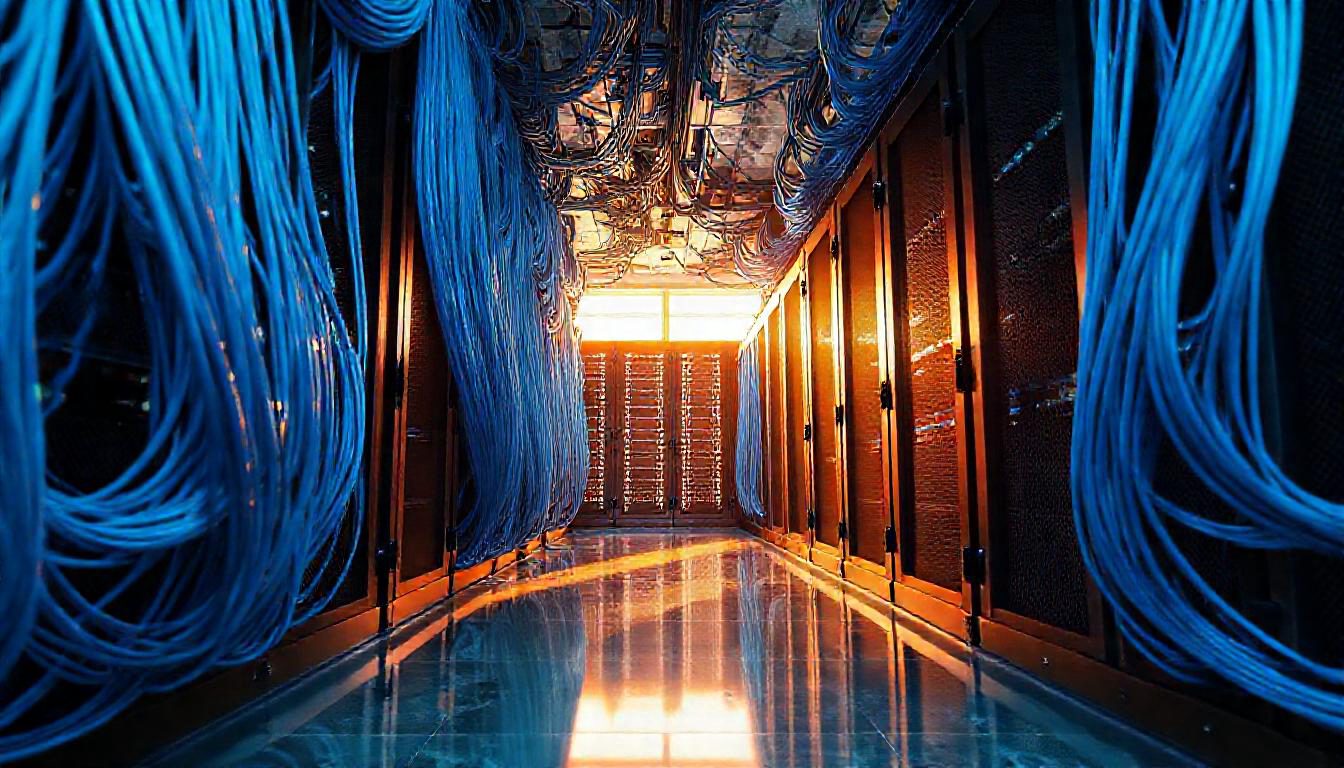
As artificial intelligence models scale from billions to trillions of parameters, the limiting factor for many U.S. data centers has shifted from raw compute power to data movement. For investors and operators focusing on specialized AI infrastructure, understanding neocloud interconnects is no longer optional; it is the primary determinant of return on hardware capital.
Why Neocloud Interconnects Define AI Efficiency
Traditional cloud architectures were designed for web traffic and storage, where latency tolerance is higher. AI training clusters, however, require massive parallelism. When thousands of GPUs operate as a single logical unit, any delay in synchronizing weights across nodes creates idle silicon. This inefficiency erodes the value of expensive accelerators like Nvidia’s Blackwell series. The bottleneck is rarely the processor itself but the network fabric connecting them.
The Shift to Optical Interconnects
The industry is rapidly moving toward co-packaged optics and silicon photonics. By integrating optical transceivers directly with switch silicon, engineers reduce power consumption and latency. For U.S. startups building neocloud platforms, this hardware upgrade is critical. It allows for denser rack configurations without thermal throttling, directly impacting the operational expenditure that determines long-term viability.
Assessing Network Fabric Liability in Hardware Investment
When evaluating neocloud valuations, sophisticated investors must look beyond GPU counts. The quality of the network fabric dictates whether those GPUs are utilized effectively. A poor interconnect strategy leads to “stranded compute,” where hardware depreciates faster because it cannot sustain full load.
Key factors include:
- Bandwidth per Watt: Higher efficiency allows for denser deployments within standard power envelopes.
- Protocol Overhead: The choice between InfiniBand and Ethernet AI profiles affects packet loss and latency in large-scale clusters.
- Scalability Limits: How easily the fabric can expand from 1,000 to 10,000 nodes without re-architecting.
Read also: Data Center Hardware Trends: Mastering the Liquid Cooling Shift · Data Center Power: A Guide to Selecting AI Hardware
Strategic Implications for U.S. Data Centers
Heading into the fourth quarter of 2026, the demand for low-latency networking has outpaced supply. U.S. data centers that invested early in advanced interconnects are reporting higher utilization rates compared to legacy facilities. This divergence creates a two-tier market. Investors who focus on platforms with robust neocloud interconnects are better positioned to capture premium pricing for reliable AI compute.
“The network is the computer. In AI infrastructure, the fabric determines the speed of learning, not just the speed of calculation.”
Conversely, operators clinging to older networking standards face rising maintenance costs and diminishing returns. The depreciation curve for these assets steepens as their effective throughput lags behind newer generations. This makes them risky holdings for portfolios seeking exposure to the next phase of AI growth.
For official data and guidance on this topic, see IEEE Spectrum.
Key Takeaways
- Neocloud interconnects are now the primary bottleneck for AI scaling, surpassing GPU processing limits.
- Investors must audit network fabric efficiency to avoid assets with stranded compute capacity.
- Silicon photonics and co-packaged optics offer the best path for power-efficient, low-latency data movement.
- U.S. data centers with superior networking hardware command higher occupancy rates and premium pricing.


Comments (1)