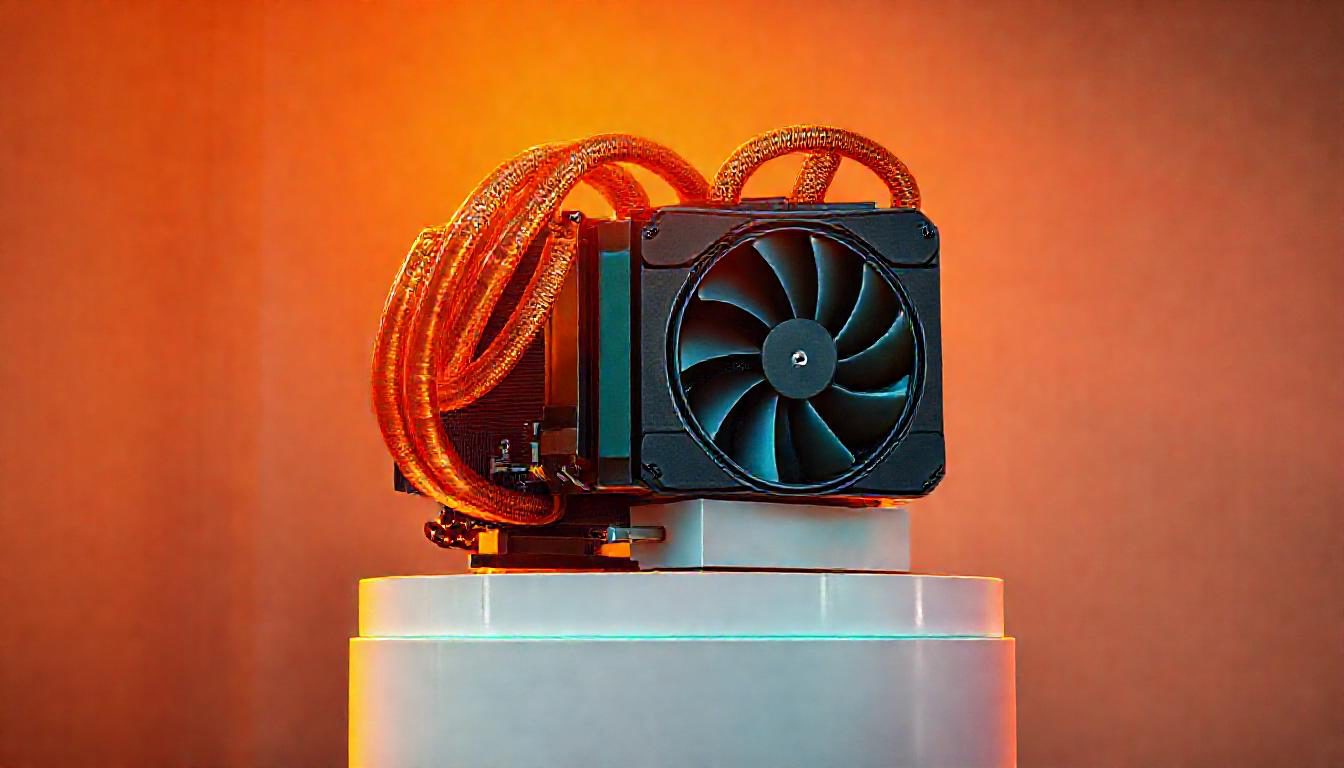
The trajectory of data center hardware trends is no longer governed solely by silicon speed, but by thermodynamics. For decades, the industry relied on air cooling, using fans to push chilled air over components. That paradigm is collapsing under the pressure of AI workloads. The current generation of high-performance computing racks consumes 5 to 10 kilowatts per rack, a density that air cannot effectively dissipate without massive, inefficient energy expenditures. Now, liquid cooling is transitioning from a niche optimization to a mandatory infrastructure component, significantly impacting liquid cooling capex.
For American entrepreneurs and investors, understanding this shift is critical. Data centers are the backbone of the AI economy, and their hardware configuration dictates both operational costs and scalability. If a facility is not preparing for direct-to-chip liquid cooling, it risks becoming obsolete within its planned lifecycle. This guide breaks down the mechanics of this transition, the capital implications, and the strategic opportunities emerging in the U.S. market.
Why Air Cooling Hits a Hard Wall
The physics of heat transfer is unforgiving. Air has a low specific heat capacity, meaning it requires high flow rates to remove significant amounts of heat. As chip designers push performance, thermal design power (TDP) spikes. Modern accelerators from Nvidia and AMD are generating heat densities per square inch that far exceed the capabilities of traditional HVAC systems.
When air cooling approaches its limit, cooling systems consume more than 40% of a data center’s total power just to remove heat. This creates a paradox where more computing power requires disproportionately more energy just to keep the servers from throttling. The industry is responding by embracing liquid cooling, which has a significantly higher heat transfer coefficient. Water, or specialized dielectric fluids, can absorb and transport heat away from the processor surface far more efficiently than air, reducing the energy penalty and allowing for higher compute density.
The Two Paths: Cold Plate vs. Immersion
> Liquid cooling isn’t a single technology; it’s a spectrum of implementation strategies that dictate hardware compatibility and maintenance complexity.
Investors need to distinguish between the two primary architectures dominating data center hardware trends.
- Direct-to-Chip Liquid Cooling (Cold Plates): This is the most common retrofit path. A metal block, or cold plate, is mounted directly on top of the CPU or GPU. Coolant circulates through channels in the plate, absorbing heat. This system requires specialized manifold connections on the rack and a CDU (Coolant Distribution Unit) to manage the flow. It is less invasive than full immersion but requires precise engineering to ensure leak-proof reliability.
- Immersion Cooling: Servers are submerged entirely in a non-conductive, dielectric fluid. The fluid boils off the heat from the chips, rises, and is condensed back into a liquid. This eliminates fans entirely, reducing noise and power consumption significantly. However, immersion requires hardware redesign; standard components can fail due to fluid compatibility issues, and maintenance is harder because you cannot easily swap a “wet” server.
The choice between these methods depends on the existing infrastructure and the operator’s risk tolerance. Cold plate is the pragmatic choice for AI training clusters using current hardware, while immersion is seen as the long-term goal for maximizing density and reducing power usage effectiveness (PUE).
Impact on Supply Chains and CapEx
The shift to liquid cooling has profound implications for capital expenditure. Traditional data center buildouts are dominated by power and cooling infrastructure costs, but liquid cooling flips the script. The hardware itself becomes more complex, requiring integrated cooling components on servers. This benefits manufacturers who have already engineered liquid-cooled-native servers, such as Nvidia’s GB200 NVL72 racks, which are designed with liquid cooling as a core feature.
For U.S. investors, supply chain visibility is key. The market for heat exchanger plates, pumps, and dielectric fluids is expanding rapidly. Companies that specialize in thermal management are seeing increased demand. Simultaneously, power density constraints are driving a new wave of “neocloud” providers who build facilities specifically optimized for liquid cooling, offering better economics for AI startups than legacy colocation centers.
Why This Matters for Returns
The return on investment for data centers is often measured in PUE. Legacy air-cooled facilities operate at a PUE of 1.4 or 1.5, meaning nearly half the power goes to cooling. Liquid-cooled facilities can achieve a PUE of 1.1 or lower. In an energy-constrained market where the Federal Reserve is sensitive to inflation driven by energy costs, and where grid capacity is a bottleneck in hubs like Northern Virginia, improving PUE is a financial imperative.
A 0.1 point improvement in PUE across a 100MW facility can save millions of dollars annually in electricity costs, directly boosting the asset’s net operating income and valuation.
Strategic Investment Angles
Identifying winners in this transition requires looking beyond chip makers. The ancillary services around liquid cooling are becoming lucrative. Maintenance contracts for cooling systems are more complex and expensive than fan replacement, creating recurring revenue streams for specialized service providers. Furthermore, the real estate market is bifurcating. Facilities with high ceiling loads (for immersion tanks) and reinforced floors for dense racks are commanding premium rents compared to legacy shells that cannot support liquid infrastructure without massive retrofitting.
Key Takeaways
- Air cooling is obsolete for AI density: The physical limits of heat dissipation are forcing a rapid adoption of liquid cooling solutions.
- Technology bifurcation: Investors should distinguish between direct-to-chip cold plates (near-term standard) and full immersion (long-term efficiency play).
- CapEx restructuring: New facilities must budget for integrated cooling hardware, shifting costs from facility infrastructure to server design.
- Energy efficiency drives value: Lower PUE achieved through liquid cooling directly correlates to higher asset valuation and lower operational risk in power-constrained regions.
FAQ
Is air cooling completely dead for all data centers?
No, air cooling remains viable for traditional enterprise servers and storage systems with lower thermal loads. The shift is specific to high-performance computing and AI training clusters where rack density exceeds the capacity of standard HVAC systems.
Does liquid cooling require new server hardware?
For direct-to-chip solutions, specialized server designs are necessary to integrate cold plates and manifolds. Immersion cooling requires fluid-compatible components, which may necessitate custom hardware or the use of standard servers with specific dielectric fluid ratings.
Are power companies supporting this transition?
Utility companies in the U.S. are increasingly cautious about granting large power connections. Efficient cooling lowers the overall power demand for a given amount of compute, making it easier for operators to meet grid capacity constraints and negotiate better power purchase agreements.
What is the biggest risk for investors in liquid-cooled facilities?
The primary risk is operational complexity and potential leaks or fluid incompatibility issues. Unlike air cooling, liquid systems have moving parts and fluids that can cause catastrophic damage to servers if not meticulously maintained and monitored.
For official data and guidance on this topic, see NIST.
Read also: Neocloud Capacity Clause: Why Investing in AI Hardware Fails Without Power · Neocloud Asset Life: Investing Impact of Silicon Depreciation
Comments (0)
No comments yet. Be the first to share your view.