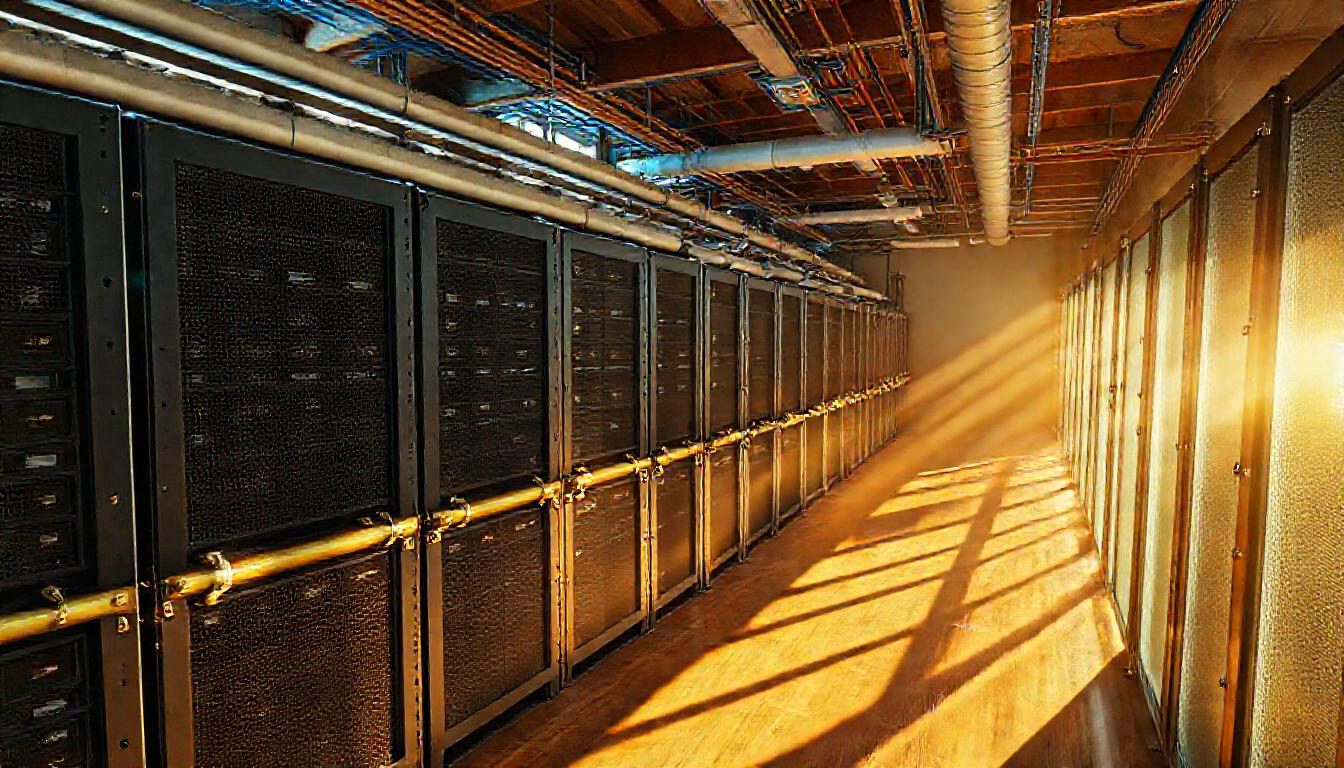
The era of adequate air conditioning in hyperscale facilities is ending. For U.S. tech investors, data center cooling hardware has transitioned from a utility line item to a critical determinant of asset longevity and operational efficiency. With GPU rack densities climbing past 120 kW, traditional air handling is hitting thermodynamic limits, creating a massive inflection point for capital allocation.
Liquid Cooling Efficiency Drives Data Center Valuation
Cooling efficiency directly correlates with Power Usage Effectiveness (PUE), a metric that dictates ongoing operational costs. In 2026, a data center with a PUE of 1.3 is not just “green”; it is cheaper to run, offering higher net operating income (NOI) margins than facilities stuck at 1.6. Investors must scrutinize how much of the CapEx is allocated to the cooling loop versus the compute stack itself.
Liquid cooling is no longer optional for next-generation AI clusters. It is the baseline requirement for viable infrastructure.
Key Cooling Technologies to Watch
When evaluating infrastructure deals, distinguish between transitional technologies and end-state solutions. The market is bifurcating rapidly.
- Direct-to-Chip Liquid Cooling: This involves cold plates mounted directly on CPUs and GPUs, circulating coolant through micro-channels. It is the current standard for Nvidia H100 and B200 deployments. Look for partnerships with cooling specialists who can scale manufacturing to meet hyperscaler demand.
- Immersion Cooling: Servers are submerged in non-conductive dielectric fluids. While highly efficient, adoption has been slower due to maintenance complexity. However, as rack densities exceed 150 kW, immersion becomes the only viable path for sustained performance without thermal throttling.
- Rear-Door Heat Exchangers: A retrofittable solution for legacy facilities. These units capture hot air at the rack rear, improving efficiency without a complete infrastructure overhaul. They represent a strong opportunity for value-add real estate investors looking to upgrade older assets.
Regulatory and Utility Pressures
Beyond physics, policy is shaping the sector. U.S. utilities in Virginia, Oregon, and Texas are imposing stricter efficiency mandates for new interconnections. Facilities failing to meet these thermal benchmarks risk grid dependency issues or higher tariff rates. Investors should prioritize assets in jurisdictions with clear, favorable renewable energy procurement policies that align with high-efficiency cooling profiles.
For official data and guidance on this topic, see NIST.
Read also: Neocloud Hardware Clause: The Investing Risk in Custom Silicon · Nvidia vs AMD AI Chips: The 2026 Investing Outlook
Key Takeaways
- CapEx Shift: Expect a 15-20% increase in infrastructure budgets dedicated to data center cooling hardware as liquid systems replace air units.
- PUE Premium: Assets with PUE below 1.25 command significant valuation premiums due to lower long-term operating costs.
- Technology Risk: Avoid over-leveraging facilities reliant solely on air cooling for AI workloads; retrofit costs will erode returns.
- Supply Chain: Monitor hardware suppliers with proven scalability in liquid cooling components, as shortages can delay project completion.


Comments (2)