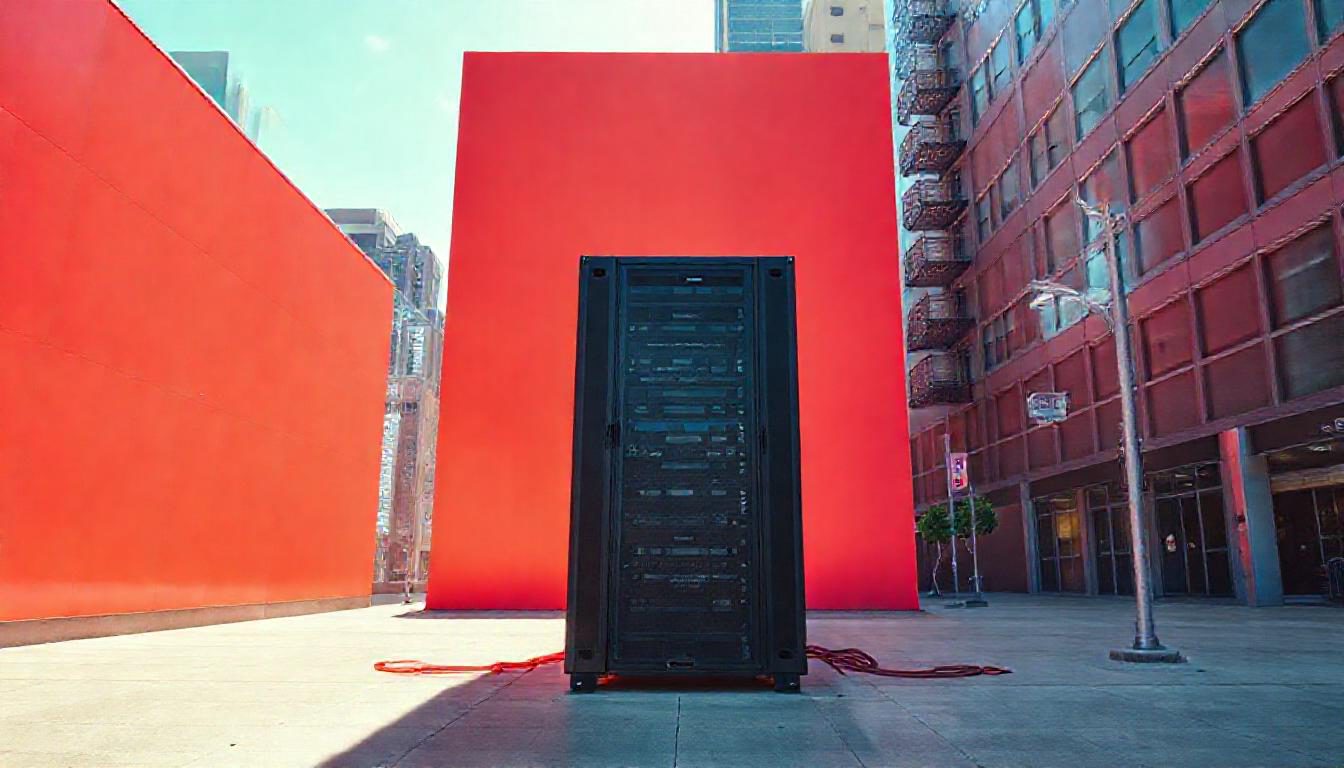
The rush to secure artificial intelligence compute has turned data center real estate and hardware contracts into a high-stakes arena for U.S. investors. While headlines focus on GPU shortages, the financial backbone of the industry relies heavily on the business model known as “neoclouds.” These specialized providers offer high-performance computing capacity, often with faster deployment than traditional hyperscalers. However, a specific contractual mechanism, the neocloud capacity clause, is creating significant friction and risk for capital allocators who overlook its nuances. Understanding this legal structure is essential for anyone assessing the profitability of AI infrastructure investments in early 2026, particularly regarding the hardware depreciation impact.
What Is the Neocloud Capacity Clause?
At its core, the neocloud capacity clause is a contractual provision that dictates how much computing power a provider must reserve or deliver to a client within a specific timeframe. Unlike standard cloud services that operate on a pay-as-you-go model, neoclouds often require long-term commitments to justify the upfront capital expenditure for hardware like Nvidia’s latest Blackwell GPUs. This clause typically binds the provider to maintain a certain level of availability or “capacity,” even if the client does not fully utilize it. For investors, this creates a double-edged sword: it guarantees revenue streams but also imposes rigid operational liabilities.
The pressure on providers to honor these clauses is intensifying. With hardware cycles accelerating, the gap between contract signing and actual delivery can span several quarters. During this period, the value of the reserved hardware may depreciate significantly due to technological advancements. This mismatch between fixed contractual obligations and rapidly falling hardware costs is where the primary financial risk lies, highlighting the hardware depreciation impact.
Capital Expenditure and Hardware Depreciation Impact
The primary concern for financial analysts is the misalignment between the neocloud capacity clause and hardware depreciation schedules. When a provider signs a multi-year contract promising specific capacity, they are effectively locking in capital expenditure (CapEx) at current prices. However, semiconductor technology moves faster than legal contracts. For instance, a contract signed in late 2025 may require the provision of hardware that becomes obsolete or cheaper to replace by mid-2026.
“The rigidity of the neocloud capacity clause exposes providers to the rapid deflationary tailwind of semiconductor innovation.”
This dynamic complicates valuation models. Traditional accounting methods often assume linear depreciation of assets. In the AI sector, hardware loses value exponentially as newer, more efficient models hit the market. If a provider is forced to maintain legacy capacity to satisfy a clause, they face a “stranded asset” risk. Investors must scrutinize whether the provider has hedged against this hardware depreciation impact or if the contract terms allow for technology refreshes without penalty.
Key Financial Impacts
- Reduced Flexibility: Providers cannot easily pivot to newer hardware if it violates capacity commitments.
- Margin Compression: The cost of maintaining older hardware often exceeds the value it generates.
- Liability Risks: Breaching capacity clauses can result in substantial penalties, impacting cash flow.
Read also: Yield Metrics Define the Resilience of US Chip Supply Chains · U.S. Chip Act Clause: How Federal Subsidies Reshape Silicon Valley Supply Chains
How Does It Affect Investors and Entrepreneurs?
For U.S. entrepreneurs and enterprise clients, the neocloud capacity clause offers a tangible benefit: guaranteed access to scarce compute resources. In a market where waiting for capacity can delay product launches by months, certainty is valuable. However, this security comes at a premium. Startups must weigh the cost of rigid contracts against the flexibility of spot markets or traditional cloud providers. For many, the artificial cap on operational agility can be a strategic disadvantage, particularly if their business model scales faster than anticipated.
From an investment perspective, the rise of these clauses signals a shift in power dynamics. Providers are prioritizing long-term stability over short-term flexibility, reflecting a mature stage in the AI infrastructure boom. Venture capitalists and private equity firms should look for platforms that offer hybrid solutions—contracts that include “technology refresh” provisions allowing providers to upgrade hardware without breaching capacity terms. These flexible structures are likely to command higher valuations in the coming quarters, mitigating the hardware depreciation impact.
Regulatory and Market Implications
The widespread adoption of the neocloud capacity clause also has broader market implications. As these contracts proliferate, they create a secondary market for compute capacity. Providers may struggle to offload reserved but unused capacity, leading to inefficiencies. Regulators in the U.S. are beginning to pay attention to how these agreements impact competition. There is a growing concern that large tech firms can lock up capacity through long-term clauses, stifling smaller competitors who lack the capital to commit to such rigid structures.
Furthermore, the environmental impact of maintaining underutilized capacity is a rising issue. Data centers consume vast amounts of energy. Contracts that force providers to keep hardware powered on to meet “availability” standards contribute to unnecessary carbon emissions. Investors focused on ESG (Environmental, Social, and Governance) criteria are increasingly wary of companies with inefficient capacity clauses that penalize idle hardware rather than encouraging dynamic resource allocation, ignoring the hardware depreciation impact.
Key Takeaways
- The neocloud capacity clause guarantees compute availability but locks providers into rigid hardware commitments.
- Investors face risks from rapid hardware depreciation outpacing contract terms, leading to potential stranded assets.
- Entrepreneurs gain certainty but may lose operational flexibility and pay a premium for reserved capacity.
- Regulatory scrutiny is increasing regarding competitive impacts and environmental inefficiencies.
- Future valuations will favor providers with hybrid contracts allowing for technology refreshes without penalties.
For official data and guidance on this topic, see Semiconductor Industry Association.
FAQ
What is the main risk of the neocloud capacity clause for providers?
The main risk is the mismatch between long-term contractual obligations and the rapid depreciation of AI hardware. Providers may be forced to maintain obsolete or costly-to-run equipment to satisfy capacity guarantees, compressing margins. This illustrates the hardware depreciation impact.
Do all AI infrastructure contracts include a neocloud capacity clause?
No, traditional hyperscaler contracts often operate on different models. The capacity clause is specific to neoclouds that offer dedicated or reserved high-performance computing capacity, distinguishing them from general-purpose cloud services.
How can startups mitigate risks associated with these clauses?
Startups should negotiate for flexibility, such as technology refresh options or shorter contract terms. They must also carefully assess whether the guaranteed capacity is worth the fixed costs compared to more flexible, though less certain, spot market alternatives. This helps manage the hardware depreciation impact.

Comments (2)