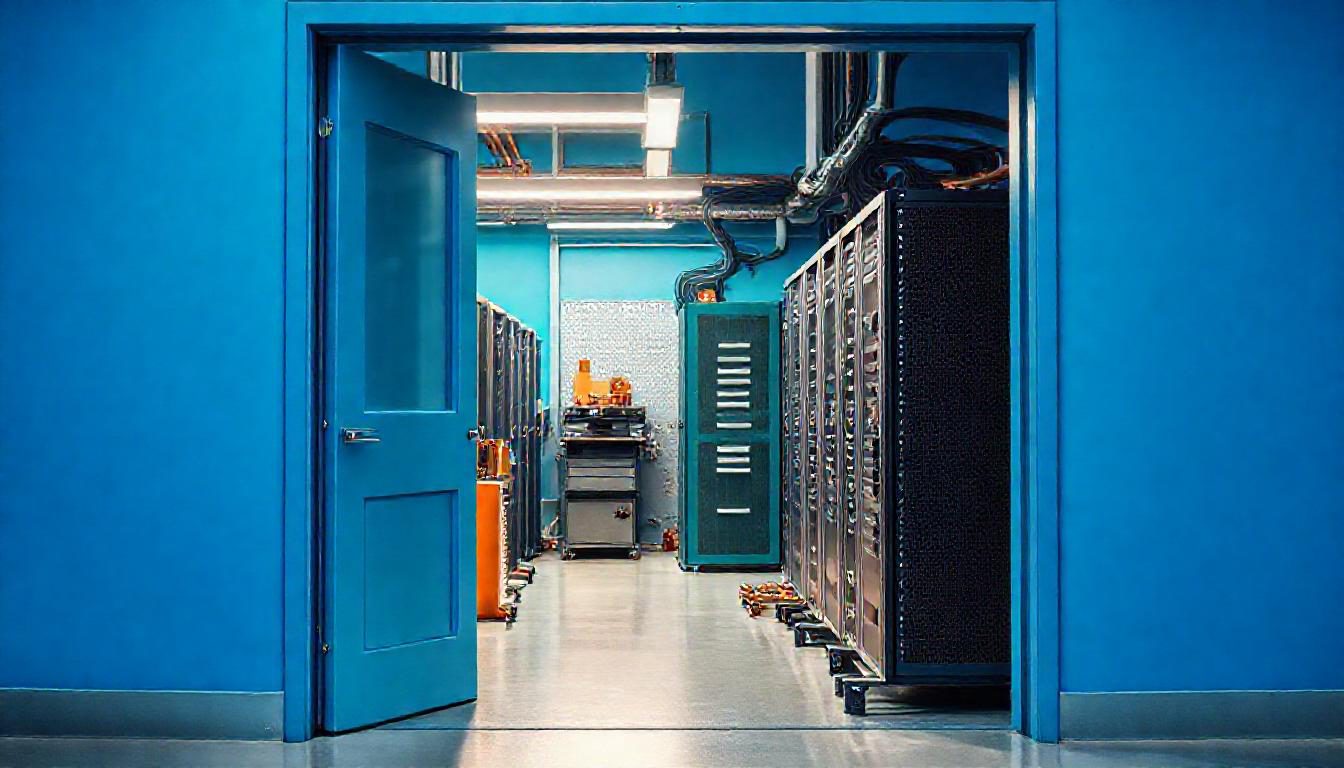
The rush to build AI infrastructure has created a capital-intensive arms race where speed often overrides sustainability. For American investors, the primary risk in current AI hardware scaling is not just technological obsolescence, but the structural fragility of long-term contracts used to fund these massive data centers. As neocloud providers secure footholds in the market, understanding how capacity clauses interact with AI hardware depreciation becomes critical for evaluating portfolio exposure.
How Do Capacity Clauses Impact AI Hardware Depreciation?
Neocloud providers, distinct from hyperscalers like AWS or Azure, often rely on aggressive lease agreements to secure capital expenditure for GPUs and specialized accelerators. These contracts frequently include “use-it-or-lose-it” capacity clauses. If a tenant fails to meet minimum utilization thresholds, they forfeit prepaid credits or face steep penalties. While this guarantees revenue visibility for the provider, it shifts significant operating leverage risk onto the tenant, who must pay for idle hardware.
From an investor’s perspective, this structure creates a false sense of security. High utilization rates are required to service the debt used to buy the hardware. If AI demand shifts from training to inference, or if a model’s efficiency improves unexpectedly, utilization drops. Suddenly, the provider faces a revenue cliff while still carrying the fixed costs of powering and cooling dormant servers. This mismatch is a silent killer in tech investing, often hidden within the fine print of enterprise contracts.
The psychological trap for boards and executives lies in the asymmetry of these commitments. A CEO entering a three-year capacity clause with a neocloud provider often believes they are locking in price certainty. In reality, they are locking in volume certainty. If the competitive landscape shifts—say, a rival releases a more efficient model requiring fewer compute cycles—the tenant cannot easily downsize without triggering punitive breach-of-contract fees. For investors, this means that the apparent liquidity of these tech stocks is an illusion. The underlying cash flows are tethered to rigid obligations that do not flex with market sentiment or technological breakthroughs.
The Hidden Liquidity Trap in Neocloud Debt
The financial engineering behind many neocloud expansions relies heavily on asset-backed securities and private credit facilities. These instruments are often rated based on the projected cash flows from long-term capacity contracts. However, the durability of these cash flows assumes that the hardware remains competitive and the tenants remain solvent.
When a neocloud provider issues debt to purchase Nvidia H100s or B200s, lenders look at the take-or-pay structure as a safety net. But this safety net has holes.
- Counterparty Risk: Many neoclub clients are startups or mid-sized tech firms burning cash. If a key tenant runs out of runway, the capacity clause becomes worthless paper. The provider cannot simply resell the specialized hardware to another tenant without significant downtime and reconfiguration costs.
- Covenant Breaches: As asset values fluctuate with tech cycles, loan-to-value ratios can deteriorate rapidly. A drop in the secondary market price of AI chips can trigger margin calls or require equity injections from the provider’s balance sheet.
- Refinancing Walls: Much of this debt was raised in a low-interest-rate environment. As the Federal Reserve maintains rates at elevated levels, the cost of servicing this capital-intensive infrastructure rises, squeezing margins that were already thin due to competitive pricing pressures.
American investors holding corporate bonds or preferred equity in these entities must scrutinize the covenants. Are there restrictions on re-leveraging? Do the lenders have the right to seize assets if utilization drops below a certain threshold for two consecutive quarters? The answers to these questions often determine whether a holding is a safe yield play or a distressed asset waiting to happen.
Read also: Enterprise SSD Selection: A Investing Guide for Data Centers · AI Compute Scarcity: Hedging Portfolios via Capacity Clauses
What Is the Real Cost of AI Hardware Depreciation?
AI hardware scaling accelerates depreciation schedules. Traditional enterprise servers might depreciate over five to seven years. However, the pace of innovation in chip design—driven by Nvidia, AMD, and custom silicon startups—compresses this lifecycle. A GPU cluster purchased today may be economically obsolete within 36 months due to newer architectures offering significantly higher FLOPS per dollar.
| Hardware Type | Typical Depreciation (Legacy) | Estimated AI Lifecycle (2026) | Key Risk Factor |
|---|---|---|---|
| General Server | 5–7 Years | 4–5 Years | Obsolescence |
| AI Accelerator | 3 Years | 2–3 Years | Rapid Arch. Shift |
| Storage (SSD/NVMe) | 5 Years | 3–4 Years | Tech Transition |
When neocloud providers amortize capital expenditures over five years but the market value of the hardware collapses in three, they face significant balance sheet impairment. This is not merely an accounting issue; it impacts debt covenants. If leverage ratios spike due to asset writedowns, lenders may call loans, triggering liquidity crises. Investors holding equity or debt in these firms must scrutinize the depreciation assumptions in financial disclosures.
The speed of innovation creates a “juggernaut effect” where early adopters of first-generation AI accelerators are penalized. A cluster of A100s might still function perfectly, but its cost-per-token efficiency is now inferior to a smaller, newer H100 or B200 cluster. This forces providers into a difficult choice: maintain legacy hardware that is unprofitable to rent out, or replace it, realizing a massive loss on the initial investment.
For U.S. businesses relying on these providers, this volatility translates into unpredictable pricing. While capacity clauses lock in rates, the providers may seek to renegotiate or add surcharges for power and cooling if their margins evaporate due to hardware inefficiencies. The stability promised by long-term contracts erodes when the underlying unit economics change drastically.
Why Does Power Availability Limit Growth?
Beyond contractual and depreciation risks, the physical constraint of AI hardware scaling is power. The U.S. grid infrastructure is under immense strain. Data centers require gigawatts of uninterrupted power, yet interconnection queues for new facilities in key hubs like Northern Virginia and Texas stretch for years. This scarcity has spawned a sub-market for “power-as-a-service” agreements, which further complicate the financial models of neoclouds.
The Grid Bottleneck as a Business Risk
Power is not just a utility; it is a gating factor for growth. In states like Virginia and Georgia, where hyperscale clusters are dense, the competition for electrical capacity is fierce. Utilities are prioritizing residential and commercial customers over industrial loads in some cases, or demanding upfront infrastructure investments from data centers that can total hundreds of millions of dollars.
For neocloud providers, this means that securing a site is only half the battle. They must also secure the “deliverability” of power. If a provider builds a facility but cannot connect to the grid in time, they face sunk costs on cooling systems and networking gear while generating zero revenue. This operational risk is distinct from hardware obsolescence but equally damaging to the bottom line.
Furthermore, the allocation of quality power is becoming a political issue. As AI facilities consume more electricity, concerns about rising utility bills for American households are gaining traction. Local opposition to new data centers, fueled by fears of brownouts and increased costs, can delay permits or result in legislative caps on industrial power usage. This regulatory uncertainty adds a premium to the cost of capital for these projects.
What Happens When AI Demand Decelerates?
The current AI boom is driven by a fear of missing out among corporations and a genuine belief in transformative efficiency gains. But what happens when the hype fades?
Historically, infrastructure buildouts in telecom or dot-com eras suffered from massive overprovisioning. AI is following a similar trajectory. If model training becomes more efficient—or if we hit a plateau in scaling laws—demand for raw compute could soften.
In a scenario of decelerating demand:
- Utilization Rates Plummet: Capacity clauses become toxic. Tenants may choose to breach contracts rather than pay for unused compute, leading to litigation and revenue losses for providers.
- Asset Values Collapse: The secondary market for GPUs is illiquid. Selling thousands of high-end accelerators quickly is nearly impossible without cratering the price, further impairing balance sheets.
- Consolidation Wave: Smaller neoclouds may be acquired by hyperscalers at distressed valuations, wiping out equity holders who bet on independence.
Practical Advice for U.S. Investors
- Stress Test Cash Flows: Do not take management’s projected EBITDA at face value. Assume a 20% drop in utilization and see if the company remains solvent.
- Scrutinize Depreciation Policies: Look for companies using longer depreciation schedules than peers. This is a red flag for aggressive accounting.
- Monitor Power Costs: Companies with contracts locking in low-power rates in stable jurisdictions are safer than those exposed to spot-market energy prices in volatile regions.
- Diversify Exposure: Avoid concentrating portfolios in a single neocloud provider. The sector is still immature, and idiosyncratic risks are high.
Key Takeaways
- Capacity clauses in neocloud contracts transfer significant operating risk to tenants and create revenue fragility for providers if demand shifts.
- AI hardware depreciation is accelerating, with lifespans shrinking to 2–3 years, creating a mismatch between long-term debt structures and short-term asset value.
- Power availability in the U.S. grid is a critical bottleneck, with interconnection delays and regulatory scrutiny adding cost and risk to new builds.
- Investors must look beyond headline growth and analyze debt covenants, depreciation assumptions, and counterparty strength to assess true exposure.
For official data and guidance on this topic, see Semiconductor Industry Association.
FAQ
Are capacity clauses legally enforceable for all tenants?
Mostly yes for large enterprises with strong legal teams, but startups may lack the resources to fight enforcement, leading to costly settlements or operational paralysis.
How does AI hardware depreciation affect my 401(k)?
If your portfolio holds tech sector ETFs or individual stocks in infrastructure providers, rapid depreciation can lead to earnings misses and stock volatility, indirectly affecting long-term retirement growth.
Will the SEC regulate AI infrastructure debt?
Currently, these are often private credit deals outside standard public reporting. However, increased scrutiny on AI-related financial disclosures is likely as the sector matures and risks become more systemic.
Is it safer to invest in Nvidia than neoclouds?
Investing in the chip designer (Nvidia) offers exposure to the trend without the operational risks of data centers, power contracts, and hardware depreciation, though it carries its own valuation and geopolitical risks.

Comments (4)