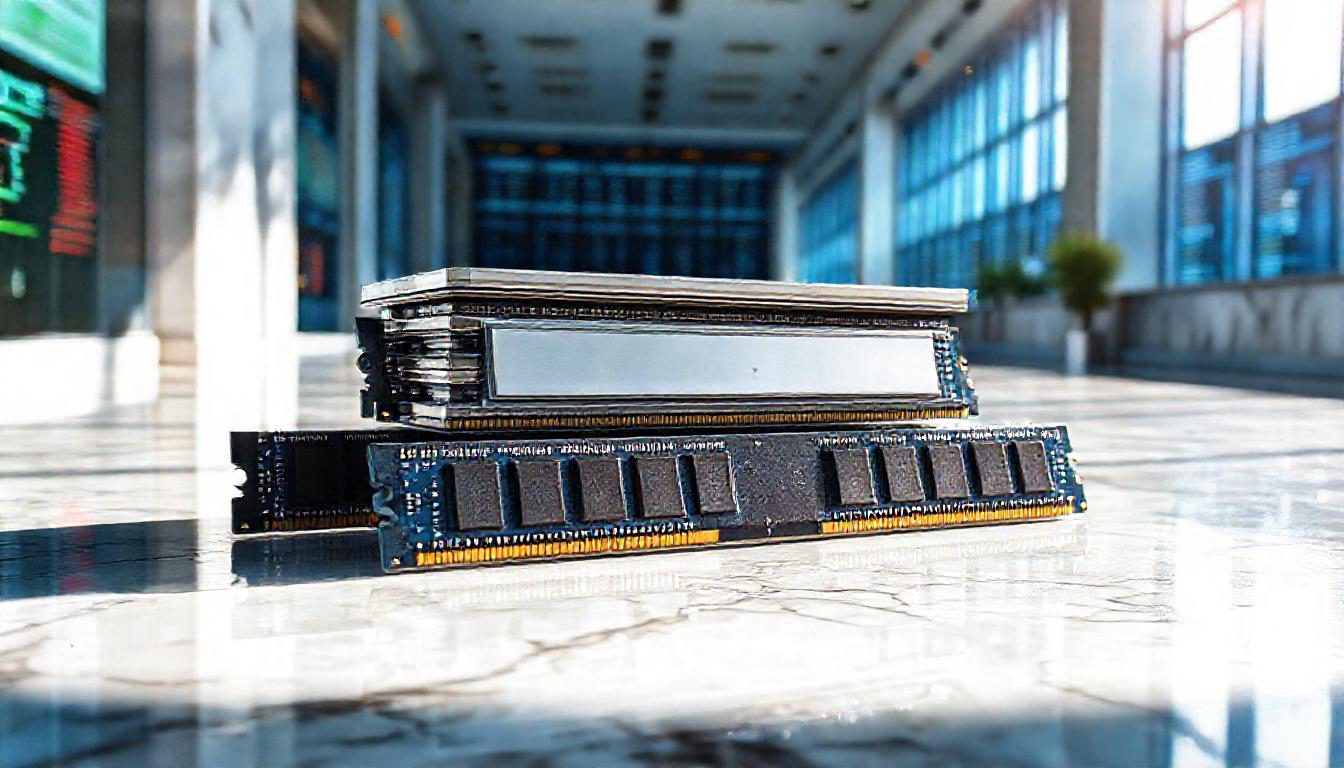
As the second quarter of 2026 kicks off, the most persistent constraint on the AI hardware ecosystem is not compute power, but connectivity. Specifically, the HBM3E capacity of High Bandwidth Memory (HBM) modules has emerged as the single largest technical and economic bottleneck for next-generation accelerators. For U.S. investors and entrepreneurs, understanding this constraint is essential, as it dictates not only server performance but also the margin structures of dominant semiconductor firms and the valuation of data center operators.
Why HBM3E Capacity Dictates AI Performance
Modern large language models (LLMs) are memory-bound, not compute-bound. While GPUs contain thousands of cores, they often sit idle waiting for data to arrive from memory. HBM3E is the current standard for high-end AI accelerators, offering significantly wider bandwidth than previous generations. However, HBM3E capacity refers to two distinct metrics: the physical bandwidth available and the actual supply volume of chips from manufacturers like SK Hynix and Micron.
The physical limit is defined by the interconnection between the GPU die and the memory stack. If the capacity is insufficient, the GPU’s tensor cores cannot be fully utilized. This leads to a phenomenon known as “memory wall,” where adding more compute units yields diminishing returns because the data pipe is too narrow. For American tech firms building proprietary models, this means that hardware selection is no longer just about peak teraflops; it is about memory throughput efficiency.
The Supply Chain Squeeze
Beyond technical specs, the global supply of HBM3E remains tight. Production yields for these complex stacked chips are lower than standard DRAM, and the packaging process requires advanced silicon interposers. Analysts estimate that supply constraints will persist through late 2026, creating an artificial scarcity that benefits incumbent manufacturers. This scarcity drives up the cost per gigabyte of high-bandwidth memory, inflating the capex for data center operators. For investors, this represents a dual impact:
- Margin Expansion: Manufacturers with secured contracts gain pricing power.
- Valuation Pressure: Hyperscalers face higher input costs, potentially squeezing free cash flow margins.
How HBM3E Capacity Impacts Nvidia’s Roadmap
Nvidia’s Blackwell architecture and its successor, Rubin, rely heavily on HBM3E. The company’s ability to ship GPUs is directly tied to how many memory stacks its partners can produce. When HBM3E capacity is constrained, Nvidia may slow down production shipments or prioritize high-margin enterprise clients over smaller startups. This creates a tiered market where access to top-tier AI hardware becomes a function of capital reserves and long-term supply agreements.
Furthermore, the integration density is increasing. Next-generation packages aim to incorporate up to 12 HBM3E stacks per GPU. This elevation in capacity requirements demands more complex 3D packaging technology, such as CoWoS (Chip on Wafer on Substrate). The bottleneck shifts from just the memory chips themselves to the advanced packaging facilities, primarily located in Taiwan but with expanding U.S. domestic capacity. Investors must watch domestic packaging expansions closely, as they are part of the broader CHIPS Act strategy to secure supply resilience.
The Investment Angle: Memory vs. Logic
Historically, logic chipmakers (like Nvidia and AMD) have captured the majority of the value in the AI supply chain. However, HBM3E capacity constraints are shifting bargaining power toward memory manufacturers. Micron, the only U.S.-headquartered major memory producer, has seen a re-rating in the market as its HBM roadmap aligns with AI demand. This suggests that a diversified investment strategy should include exposure to memory sector leaders, not just GPU designers.
The true cost of AI inference is no longer measured in FLOPS, but in dollars per gigabyte of bandwidth.
For venture capitalists and enterprise buyers, this means due diligence must extend beyond the processor vendor. Questions must be asked about memory sourcing and supply chain security. A startup claiming a breakthrough in model efficiency but relying on constrained memory hardware may face significant scaling hurdles if it cannot secure adequate HBM3E volumes.
For official data and guidance on this topic, see IEEE Spectrum.
Key Takeaways
- HBM3E capacity is the primary bottleneck for next-generation AI server performance, limiting GPU utilization despite high compute counts.
- Supply constraints from memory manufacturers are inflating hardware costs and shifting margin power toward Sk Hynix and Micron.
- Investors should monitor advanced packaging capacities and HBM manufacturing yields, particularly for U.S.-based Micron, as they directly impact Nvidia’s shipping timelines.
- Enterprise buyers must prioritize memory bandwidth efficiency in their infrastructure choices to mitigate the financial impact of scarce HBM3E capacity during 2026.




Comments (1)