
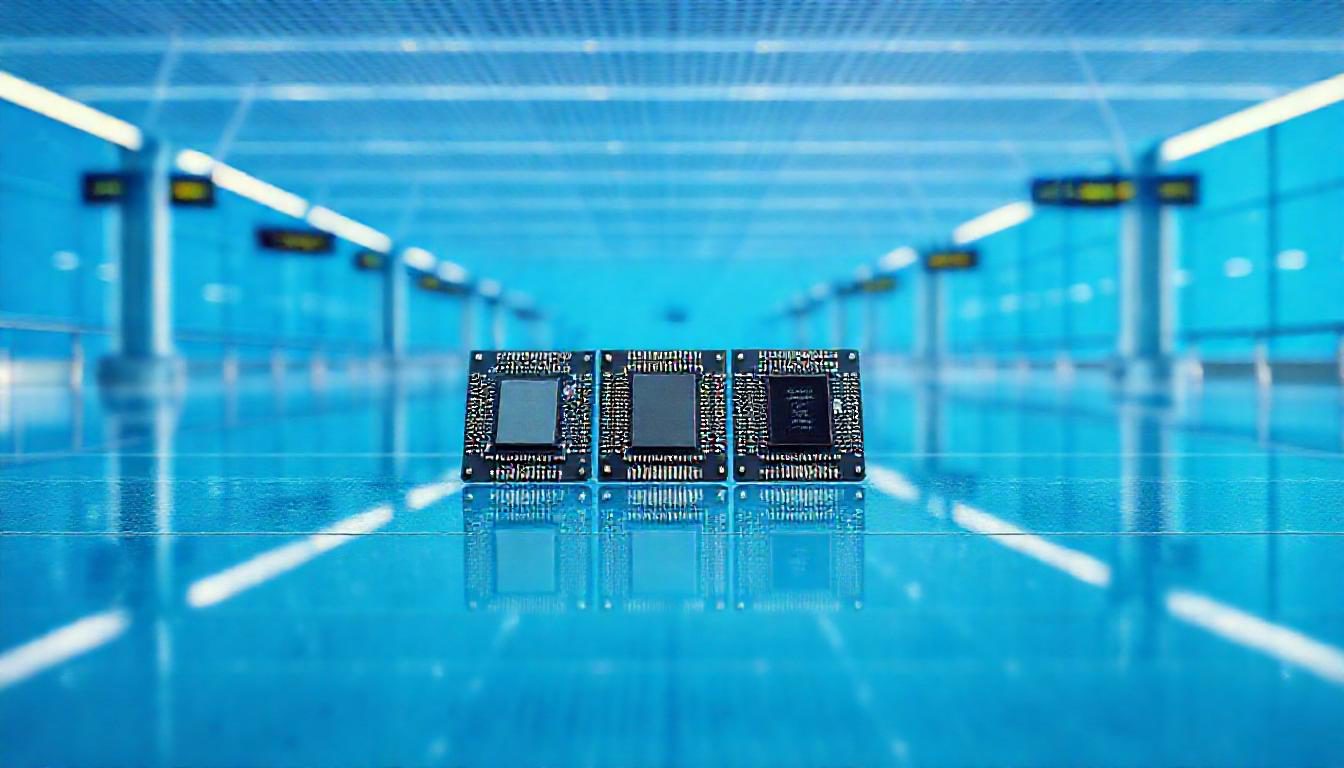
As the fourth quarter of 2026 begins, the scramble for a data center chip has reached a fever pitch unseen since the early days of generative AI adoption. Major U.S. cloud providers are aggressively securing inventory, creating a two-tier market where well-funded hyperscalers get priority, while smaller startups and mid-sized tech firms face significant wait times and inflated prices. This disparity is reshaping the economic landscape for AI development across Silicon Valley and beyond.
Why Data Center Chip Supply Is Shrinking
The primary driver of this shortage is not just increased demand, but a complex yield problem in advanced manufacturing. As leading-edge processors move to smaller transistors and 3D stacking architectures, the percentage of usable chips per wafer has dropped. Manufacturers like TSMC and Samsung are operating at near-total capacity, yet output growth has slowed relative to the exponential curve of AI training needs.
For American businesses, this means the cost of entry for heavy compute tasks is rising sharply. While hyperscalers can absorb these premiums to maintain service levels, mid-market companies are finding their AI roadmaps delayed. The result is a consolidation trend, where larger firms buy out smaller competitors who cannot secure the necessary compute resources.
What It Means for Investors
“The bottleneck isn’t just software or data; it’s physical silicon and the electricity to run it.”
Investors should watch the capital expenditure reports of public cloud giants closely this season. The divergence between stock performance and actual operational capability is widening. Companies that have locked in multi-year supply agreements for the next generation of data center chip technology are trading at a premium compared to those relying on spot markets.
Key factors to monitor include:
- Power infrastructure regulations in key U.S. states like Virginia and Texas.
- Inventory levels of legacy chips versus next-generation accelerators.
- Strategic partnerships between chip designers and energy providers.
Unpacking the Power and Cooling Bottleneck
It is a mistake to view the data center chip shortage in isolation. The real constraint is often the electrical grid and cooling capacity. A single rack of modern AI servers can draw ten times the power of traditional cloud instances. Utility providers in Northern Virginia, a global hub for data centers, are already warning of potential service delays for new builds in 2027.
This infrastructure lag means that even if a company acquires the chips, they may not have a place to run them. The market is seeing a rise in ‘bring your own power’ solutions, where tech firms invest directly in grid upgrades or renewable energy sources to secure data center slots.
For official data and guidance on this topic, see Semiconductor Industry Association.
Key Takeaways
- The data center chip market is bifurcating, favoring large enterprises over startups.
- Advanced manufacturing yields are lower than expected, constraining supply.
- Power and cooling infrastructure are becoming the new bottlenecks for AI growth.
- Investors should prioritize companies with secured supply chains and energy guarantees.

Comments (7)