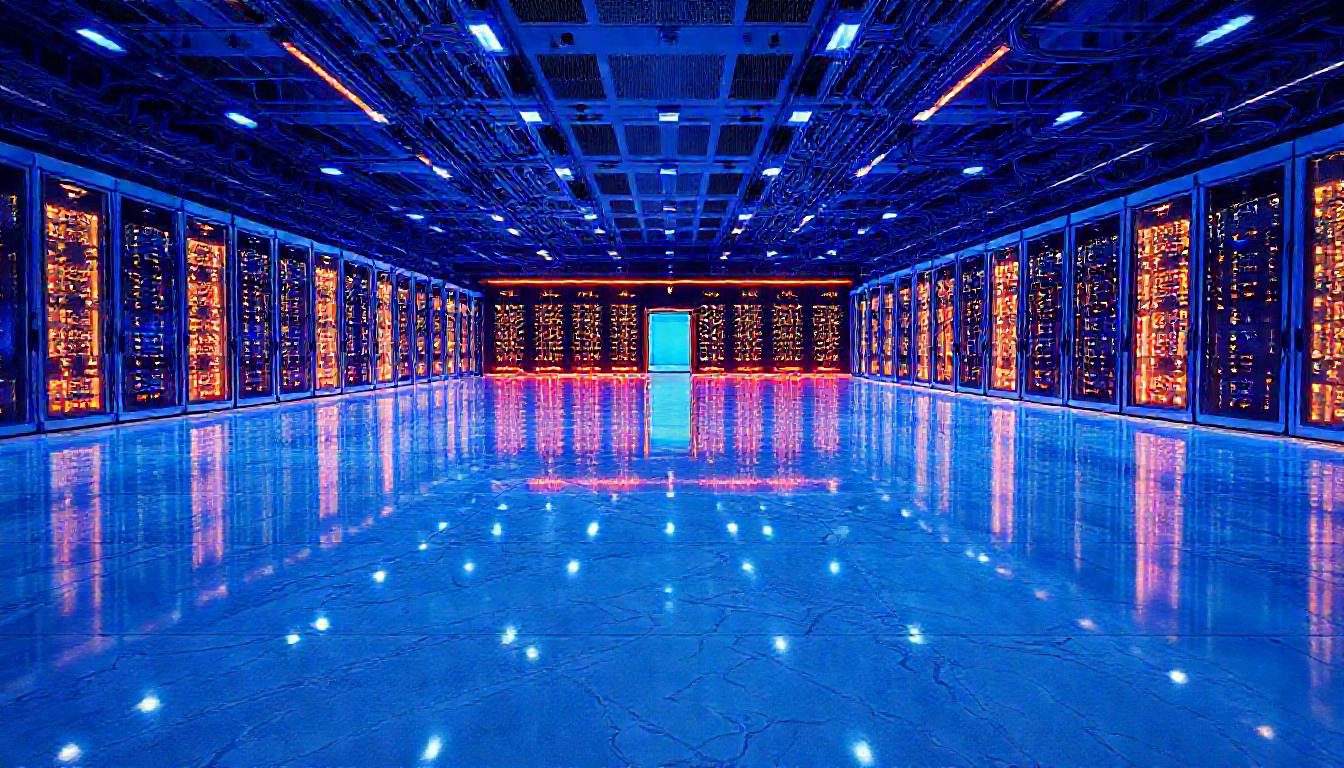
The era of easy silicon is over. For founders and venture capitalists, the critical constraint in AI hardware investing is no longer chip supply, but electricity availability. While Nvidia and AMD continue to produce high-throughput accelerators, the physical infrastructure required to run them faces a severe gridlock. In May 2026, U.S. data centers are operating at near-total capacity, creating a new class of scarcity that dictates company valuation more than software capability.
The Grid as the New Bottleneck
The shift from training large language models to deploying inference applications has exploded energy demand. Unlike traditional cloud computing, AI workloads require sustained, high-density power. A single rack of the latest accelerators can draw 120 kilowatts or more, compared to 10–20 kilowatts for standard servers. Utilities in key hubs like Northern Virginia and Oregon are enforcing strict moratoriums on new connections. This means securing power is now a competitive moat. For AI hardware investing, this reality forces a re-evaluation of asset durability.
Power Procurement Strategies
Startups cannot rely solely on the public grid. The most successful ventures are integrating microgrid solutions and on-site generation. Investors are increasingly prioritizing companies that have secured long-term power purchase agreements (PPAs) with renewable sources. These agreements provide cost predictability and regulatory compliance, which are critical for scaling. Without locked-in energy sources, a startup’s burn rate becomes volatile, driven by spot market energy prices.
The cost of computing is now the cost of energy. A GPU without power is just an expensive brick.
For official data and guidance on this topic, see IEEE Spectrum.
Regulatory Headwinds for AI Hardware Investing
Federal regulations aim to mitigate environmental impact, but they also complicate expansion. The SEC’s climate disclosure rules require public and private large players to report energy intensity. This scrutiny adds administrative overhead. Furthermore, local zoning laws are becoming stricter regarding noise and heat emission from cooling systems. Liquid cooling, while efficient, requires specialized maintenance and water usage permits that can delay deployment by months.
The Impact on Valuation Multiples
Investors are applying a discount to hardware startups that lack clear power strategies. The



Comments (3)