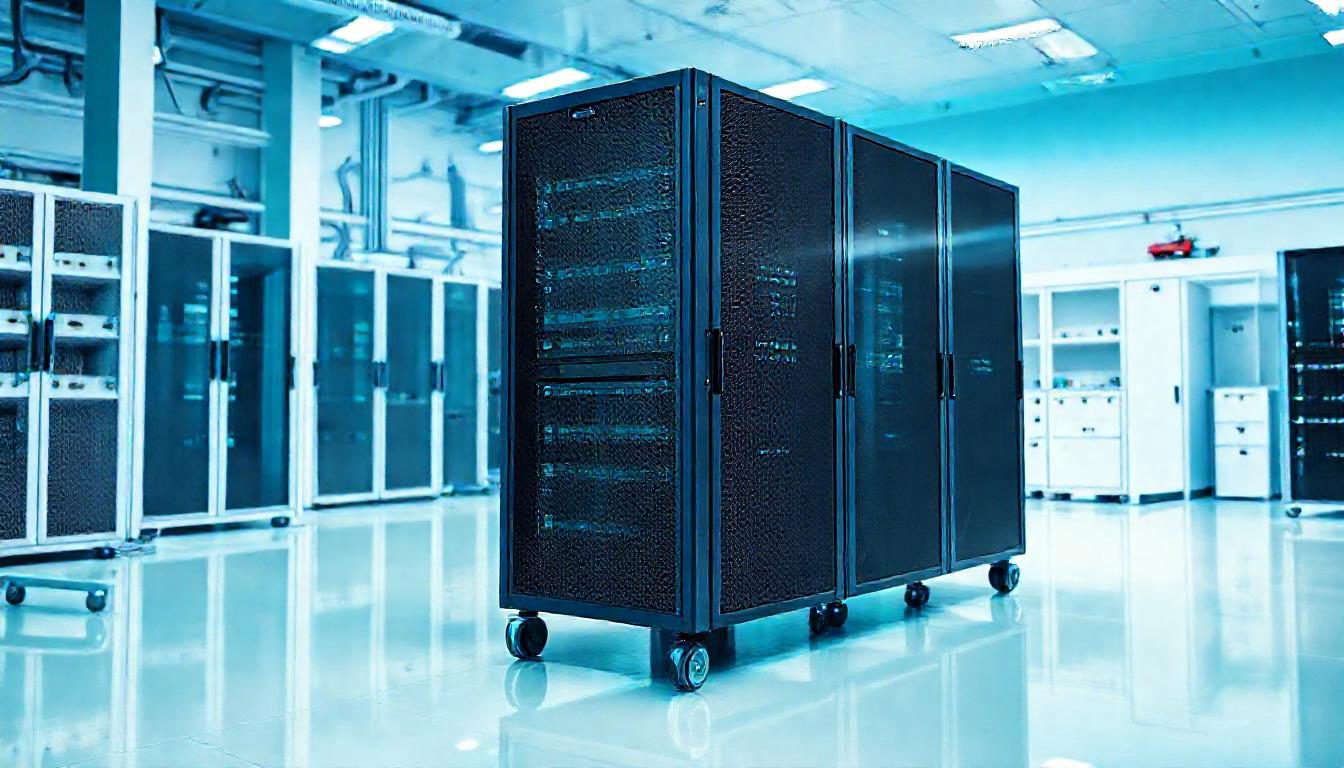
The traditional five-year depreciation schedule is breaking down, not because hardware fails, but because it doesn’t. As the industry moves deeper into the AI-driven regime, owners of Data Center Hardware are discovering a fundamental mismatch between accounting rules and physical reality regarding Hardware Lifespan. A server bought in 2025 may look identical in 2027, but its utility has shifted dramatically. Rigid refresh cycles, once the bedrock of capital planning, are now creating massive inefficiencies—capital leakage through unnecessary replacement, and invisible yield loss through over-retention of obsolete gear.
For U.S. investors and operators managing billions in infrastructure, the goal is no longer to buy the newest box every year, nor to squeeze every dollar from a legacy machine. It is to align spending with a dynamic certification framework that separates silicon longevity from workload relevance. This guide breaks down how to structure a refresh cycle for the modern AI era, focusing on where the true value leaks and how to plug those holes.
Why Traditional Depreciation Fails Hardware Lifespan
Most data centers are managed as financial assets, depreciating on a straight-line basis. This accounting convenience assumes that a server’s value drops evenly from its purchase price to zero over five years. In the CPU-dominated era, this was roughly accurate. Compute power scaled slowly, and workloads were predictable. Today, the economics are inverted.
The silicon inside high-end accelerators often remains physically viable for seven to ten years. However, the software stack—the drivers, libraries, and model architectures—evolves exponentially. A 2024-generation GPU might still run a legacy inference workload perfectly well in 2026. But if it cannot natively support the latest precision modes or memory bandwidth requirements of a 2026 model, it has become economically obsolete long before it is physically broken.
This creates a dual problem. Operators who refresh strictly on schedule are often replacing hardware that is still highly useful for stable, low-variance workloads, effectively donating capital to the hardware vendor. Conversely, operators who stretch refresh cycles to maximize book value often end up running fragmented, incompatible stacks that degrade throughput. The sweet spot lies in the middle: a certification-based approach where hardware remains in the fleet only as long as it passes strict performance benchmarks for its designated workload tier.
The Workload Tiering Strategy
Not all hardware serves the same purpose. Treating every rack with the same refresh policy is a primary source of waste. The most effective framework divides infrastructure into three distinct tiers, each with a different lifecycle expectation.
Tier 1: Frontier Training Clusters
This is the capital-intensive core. These systems run the most demanding jobs—large language model pre-training and complex scientific simulation. Here, the refresh cycle is driven by software compatibility, not hardware failure. If the cluster falls more than two generations behind, it becomes a bottleneck. The risk of holding onto Tier 1 hardware is opportunity cost. A 2026 investor should expect Tier 1 refresh cycles to be dictated by the pace of major framework releases (like PyTorch or CUDA updates) rather than fiscal quarters. The hardware here is valuable, but its utility is perishable.
Tier 2: High-Performance Inference
This tier handles real-time artificial intelligence tasks—chatbots, recommendation engines, and autonomous vehicle processing. The hardware requirements here are strictly linear: lower latency and higher throughput. Because inference workloads are generally more stable than training, Tier 2 hardware can support longer lifecycles. A GPU deployed in 2025 might remain competitive for inference through 2027, provided its memory bandwidth meets the demand curve. Investors should look for operators who aggressively reallocate hardware from Tier 1 to Tier 2, squeezing extra years of productivity out of expensive silicon before it moves down the stack.
Tier 3: General Compute and Storage
The backbone of the data center—traditional CPUs, network switches, and storage arrays. This hardware has the longest shelf life. A standard server bought for web hosting in 2023 is often perfectly adequate for internal database tasks in 2026. The refresh driver here is energy efficiency and cooling capability, not raw compute power. As U.S. energy costs continue to rise, Tier 3 hardware should be replaced only when the return on investment from energy savings exceeds the cost of the new machine. This is a disciplined, financial calculation, not a technological one.
Certification: The Pulse Check Method
To prevent mission creep in refresh schedules, operators must adopt a “Certification for Continuation” model. Instead of a calendar-based exit, hardware faces a stress test at regular intervals.
The process works like this: At the end of every 18-month period, critical systems are audited against a “Fit for Purpose” standard. The audit checks three variables:
- Driver Stability: Can the hardware support the latest OS and hypervisor updates without regression?
- Performance Headroom: Is the system operating above 80% of its theoretical capability? If utilization is low, the hardware might be oversized for its task.
- Energy Cost per FLOP: Has the cost of running the system exceeded the amortized cost of a newer, more efficient unit?
If a server passes, it stays. If it fails, it is decommissioned or moved to a lower tier. This method filters out emotional attachment to hardware and replaces it with data-driven lifecycle management. For investors, this framework represents a sophisticated operational moat—companies that master this discipline achieve significantly higher return on invested capital than peers who follow standard accounting rules.
Funding the Refresh: CapEx vs. Leasing
The method of financing hardware is just as critical as the timing. Historically, data centers were built for ownership. Today, the volatility of AI hardware prices makes ownership a risky proposition.
Leasing models have gained traction, particularly for Tier 1 clusters. Leasing allows operators to align payments with the period the hardware is actually productive. However, it introduces a new risk: the “tenant trap.” If a operator leases a cluster, they may inadvertently standardize their software stack to the specific hardware available in that lease, making it difficult to switch providers or upgrade later.
U.S. companies should consider a hybrid approach. Long-life Tier 3 assets should be owned outright, locking in current prices and building equity. High-volatility Tier 1 assets should be structured as leases or funded through modular vendor financing, ensuring that if the technology shifts, the operator is not left holding the bag on depreciating assets. The goal is to match the financing term to the utility term of the hardware.
Key Takeaways
- Depreciation is decoupled from obsolescence: Hardware can remain physically viable while becoming economically useless due to software stack changes.
- Tier your fleet: Differentiate between Frontier Training, High-Performance Inference, and General Compute to apply appropriate refresh pressures.
- Use certification gates: Replace calendar-based upgrades with 18-month performance and efficiency audits to eliminate waste.
- Match financing to lifespan: Own long-term assets, but use leases for volatile AI clusters to mitigate technology risk.
FAQ
How long should accelerator hardware remain in production?
There is no fixed number, but typically 24 to 36 months for frontier training, and up to 48 months for inference if performance metrics remain stable. The decision should be driven by a comparison of energy costs and software compatibility rather than a fixed date.
What is the biggest hidden cost in hardware refresh?
Operational friction during migration. Replacing hardware introduces downtime and requires engineers to troubleshoot new configurations. A certification model minimizes this by extending the life of working assets, lowering the frequency of disruptive upgrades.
Is leasing better than buying for AI infrastructure?
For Tier 1 assets, yes. The pace of technological change is too high for traditional ownership. Leasing transfers the risk of rapid obsolescence to the vendor. However, for stable infrastructure like cooling systems or networking switches, ownership is generally more economical.
Read also: Co-Packaged Optics: How Investing in Silicon Photonics Reshapes Data Center Hardware · Intel 18A Clause: How Node Delays Impact US Investors
For official data and guidance on this topic, see IEEE Spectrum.
Comments (3)