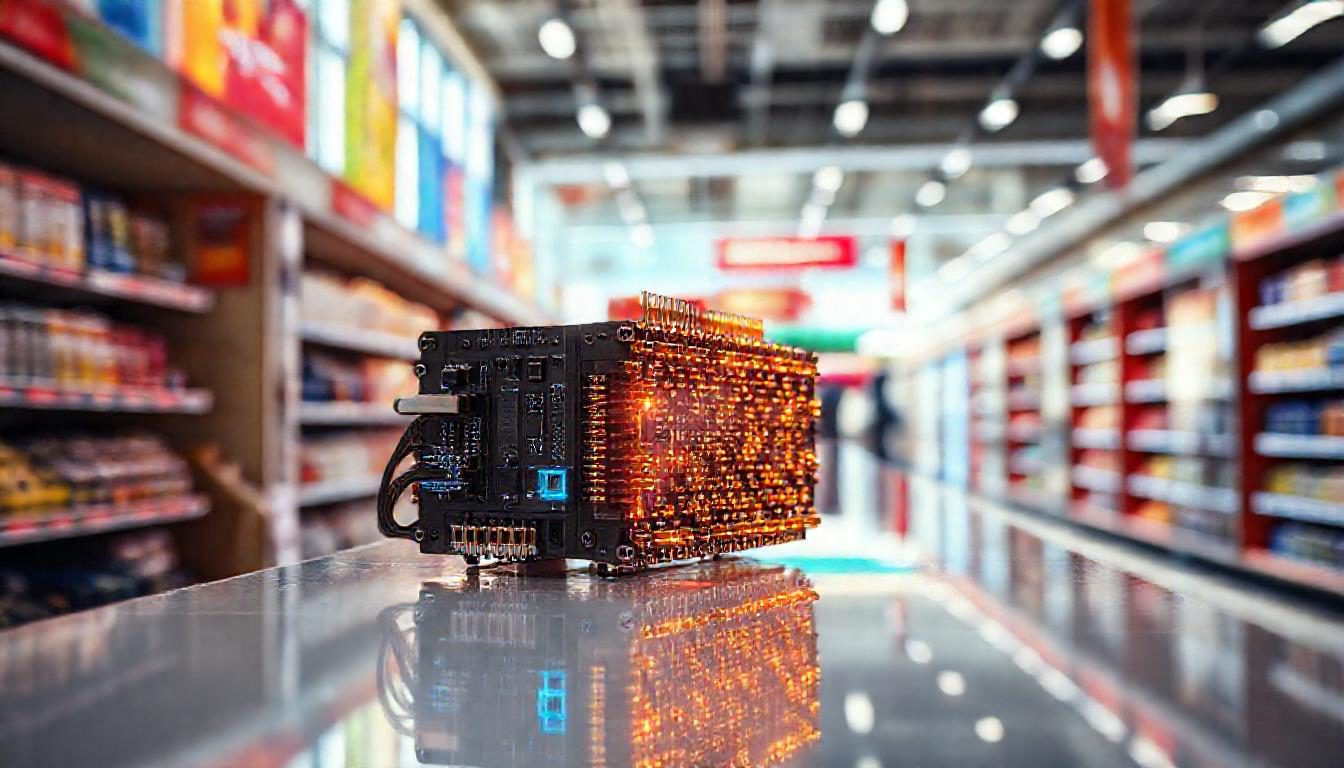
The bottleneck for artificial intelligence is no longer just compute capacity; it is the physical limitation of moving data fast enough without melting the hardware. As we head into the fourth quarter of 2026, the industry stands on the precipice of a fundamental architecture shift. The traditional approach of plugging optical transceivers into the faceplate of network switches is hitting a hard ceiling. Power consumption per bit has doubled roughly every four years, driven by the insatiable appetite of large language models for rapid train and inference cycles. The solution emerging from the labs of silicon giants is Co-Packaged Optics, a technology that integrates optical transceivers directly onto the same package as the processor or switch ASIC. This convergence promises to cut power consumption by up to 30%, a margin improvement that could define the winners of the next decade in cloud infrastructure. Evaluating the CPO ROI is now critical for strategic planning.
Why Power Limits Stall AI Scaling
For decades, the Moore’s Law trajectory of semiconductor scaling focused on transistor density. While transistor counts exploded, the bandwidth required to feed those transistors grew at a similar pace. The electrical signals traveling across copper traces in a printed circuit board suffer significant attenuation at high speeds. To compensate, systems rely on heavy-duty digital signal processing (DSP) to clean up the noise. These DSPs are power-hungry. In a 51.2 terabit switch, the DSP alone can consume more power than the switch silicon itself.
This is where Co-Packaged Optics changes the equation. By moving the optical engine from the faceplate to the package, the electrical path length shrinks from several inches to mere millimeters. This reduction essentially eliminates the need for the power-intensive DSP. The result is a dramatic drop in latency and energy per bit. For U.S. hyperscalers operating massive AI clusters, this is not just an efficiency upgrade; it is a necessity. The power envelopes of current data centers are fully saturated. Without a breakthrough like CPO, scaling to the next generation of 102.4 terabit switches would require building entirely new facilities, a capital expenditure that neither shareholders nor environmental, social, and governance (ESG) criteria support. Understanding CPO ROI helps justify these investments.
The Supply Chain Realignment for Investors
The transition to integrated silicon photonics disrupts the established hardware supply chain. Historically, the market was segmented: chipmakers made the ASICs, and separate vendors manufactured the pluggable transceivers. Companies like Coherent and Fabrinet built massive revenue streams by supplying these discrete components. CPO compresses this value chain. Now, the switch manufacturer—led by players like Broadcom and Nvidia—must integrate the optical components directly into their advanced packaging processes.
This vertical integration raises the barrier to entry. It requires deep expertise in both electronic design automation (EDA) and optical physics. For investors, this consolidation suggests a shift in margin structures. The premium moves from component distribution to intellectual property and manufacturing yield. The companies that control the packaging technology, particularly those with capacity in TSMC’s CoWoS (Chip on Wafer on Substrate) lines, will capture the lion’s share of the value.
The value in AI infrastructure is shifting from moving bits to managing the heat of those bits, making packaging yield the new metric of success.
Furthermore, the reliability concerns that have historically plagued photonics are being addressed through rigorous testing protocols. There is a fear among operators that if a laser integrated into a package fails, the entire switch must be replaced, unlike the simple swap of a pluggable module. To mitigate this, manufacturers are deploying redundant laser sources external to the switch, feeding light via fiber into the package. This hybrid approach isolates the most failure-prone component—the laser—from the solid-state silicon light engine, preserving serviceability while maintaining the power benefits. CPO ROI depends on this reliability.
Read also: Intel 18A Clause: How Node Delays Impact US Investors · U.S. Chip Act Clause: Investing in Domestic Chip Production
CPO ROI: Impact on Data Center Economics
The financial model of data center deployment is undergoing a quiet revolution driven by this hardware. The cost of power is no longer just an operational expense; it is a capital constraint. The U.S. power grid, particularly in Northern Virginia and Texas, has reached capacity limits in many regions. Utilities are demanding that new data centers bring their own power or guarantee their own cooling capacity.
CPO directly addresses these constraints by lowering the thermal footprint of the network layer. A typical AI cluster requires a multi-tier network: intra-node, inter-node, and inter-cluster. The network can account for 15% to 20% of total power consumption. Reducing this by a third frees up megawatts of available capacity within the existing facility envelope. For REITs (Real Estate Investment Trusts) and cloud providers, this means higher revenue per square foot. They can install more GPUs in the same power envelope, drastically improving return on invested capital (ROIC). This is the core of CPO ROI.
However, the upfront cost of CPO switches is higher than traditional discrete solutions. The advanced packaging and yield risks contribute to a premium, estimated at 20% to 30% over standard pluggable-based systems. Operators must weigh this higher CapEx against the lower OpEx of energy bills and cooling. In high-utilization AI clusters running 24/7, the break-even point is arriving faster than anticipated. With electricity rates rising across the U.S. and the price of carbon credits increasing, the payback period for high-density interconnects is now measured in months, not years. Calculating CPO ROI accurately is essential.
Key Takeaways
- Energy Efficiency is the Driver: Co-Packaged Optics eliminates power-hungry DSPs by shortening electrical paths, reducing network power consumption by up to 30%.
- Vertical Integration: The supply chain is consolidating as chipmakers like Nvidia and Broadcom take control of optical integration, threatening discrete transceiver vendors.
- CapEx vs. OpEx: While CPO systems cost more upfront, the reduction in cooling and power needs significantly lowers the total cost of ownership for AI clusters.
- Grid Constraints: CPO is essential for scaling AI within the current power limits of U.S. data center hubs, allowing more compute in the same footprint.
For official data and guidance on this topic, see IEEE Spectrum.
FAQ
Will Co-Packaged Optics replace pluggable transceivers entirely?
Not in the near term. Pluggables will remain dominant in enterprise standard networking and longer-reach metro applications where flexibility is paramount. CPO is specifically targeted at the highest-bandwidth, densest environments like AI back-end networks in hyperscale data centers. CPO ROI is highest in these dense environments.
How does CPO affect maintenance for data center operators?
Maintenance shifts from component replacement to system-level management. Since the optical engines are soldered to the ASIC, a failure usually requires swapping the entire switch board. To mitigate this, operators are relying on redundant external laser sources and rigorous burn-in testing to ensure high reliability before deployment. This impacts CPO ROI calculations.
Which U.S. companies are leading the CPO market?
Nvidia, via its acquisition of Mellanox and integration into its NVLink ecosystem, and Broadcom are the primary architects. TSMC is the critical manufacturing partner, providing the advanced packaging technologies like CoWoS that enable the physical integration of silicon photonics with logic chips. Market leaders focus on CPO ROI.

Comments (5)