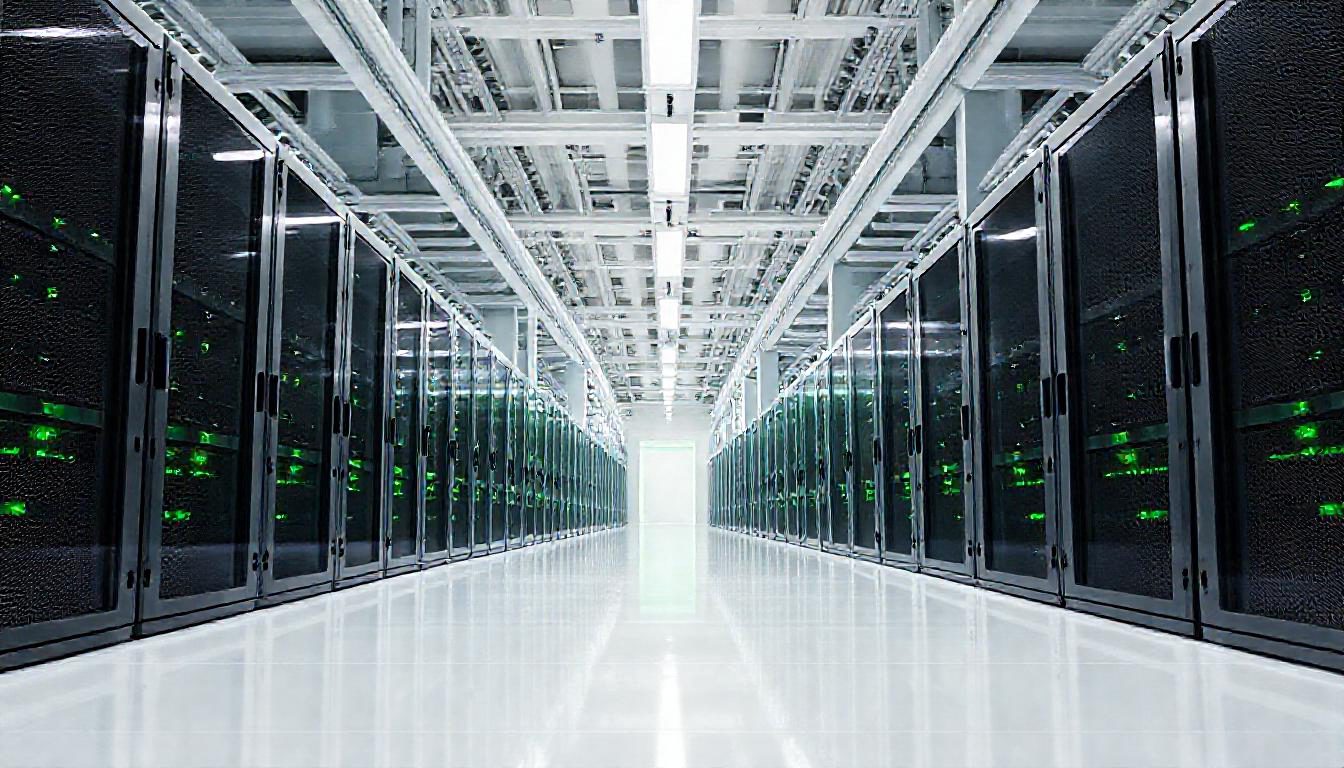
The AI infrastructure boom has created a speculative frenzy, but sophisticated capital is shifting focus from raw compute capacity to the physical reality of data center hardware. For U.S. entrepreneurs and investors, the critical question is no longer just which chip is fastest, but which infrastructure can actually run it reliably and economically. Evaluating data center hardware requires a forensic analysis of power, cooling, and lifecycle management, not just benchmark scores. This process is central to accurate data center thermal valuation.
Why Data Center Thermal Valuation Drives Value
As processor densities increase, the thermal envelope becomes the primary constraint on scalability. Investors often overlook that higher FLOPS per watt do not guarantee higher profitability if the facility cannot dissipate the heat efficiently. In 2026, the market is bifurcating between traditional air-cooled facilities and new builds designed specifically for high-density liquid cooling.
When assessing a neocloud or traditional provider, examine their cooling architecture. Air cooling remains viable for general enterprise workloads but hits a hard ceiling for AI training clusters. Facilities lacking direct-to-chip liquid cooling retrofit capabilities face steep capital expenditures to reach competitive performance tiers. This creates a hidden liability: hardware that looks modern on paper may be stranded in infrastructure that cannot support its thermal footprint. Proper data center thermal valuation accounts for these risks.
The Hidden Costs of Power Efficiency Ratios
Power usage effectiveness (PUE) is a standard metric, but it often masks true operational costs. A lower PUE does not always correlate with lower dollar costs if the facility is located in a high-rate jurisdiction or lacks on-site generation. Investors must look beyond the headline PUE number and analyze the actual cost per kilowatt-hour delivered to the chip.
Key metrics to scrutinize include:
- Grid dependency: Facilities reliant solely on municipal grids face higher volatility than those with on-site backup or renewable integration.
- Voltage regulation: Inefficient power delivery systems waste energy as heat before it reaches the processor, inflating cooling costs.
- Baseline load: Data centers with high idle power consumption suffer margin compression during demand fluctuations.
In the current economic climate, where interest rates remain elevated, even a 10% variance in energy costs can wipe out EBITDA margins for hardware-heavy startups. This volatility impacts data center thermal valuation significantly.
Read also: HBM3E vs GDDR7: The Memory Impact on AI Hardware · CHIPS Act Guardrails: Clause Risks for Hardware Investors
Lifecycle and Resale Value of Data Center Hardware
Unlike general-purpose servers, specialized AI hardware depreciates rapidly. Investors must evaluate the resale market for GPUs and custom ASICs. A common mistake is assuming hardware retains value for five years. In reality, the secondary market for older-generation Nvidia or AMD accelerators is softening as newer architectures flood the supply chain.
Consider the depreciation schedule as part of the unit economics. If a provider cannot offload older hardware at a reasonable clip, their balance sheet suffers. Look for companies that design modular infrastructure, allowing for easier swaps of compute trays without replacing entire rack systems. This modularity reduces capital intensity and improves liquidity, a crucial factor for any asset-backed financing deals. Data center thermal valuation must include lifecycle costs.
Analyzing the Supply Chain Resilience
Beyond performance, supply chain resilience determines long-term viability. With U.S. manufacturing incentives shifting domestic production, investors should favor providers with proven sourcing strategies for critical components like high-bandwidth memory and advanced packaging. Providers overly dependent on single-source suppliers in geopolitically sensitive regions face potential regulatory or logistical disruptions.
The focus keyword, data center hardware, is truly the backbone of modern tech investing. By prioritizing thermal efficiency, power economics, and modular lifecycle design, investors can distinguish between hype-driven valuations and sustainable infrastructure assets. This disciplined approach mitigates risk in a sector where technological obsolescence is measured in quarters, not years. Effective data center thermal valuation relies on this holistic view.
For official data and guidance on this topic, see NIST.
Key Takeaways
- Thermal limits are now the primary bottleneck for AI scalability; prioritize liquid-ready facilities.
- Analyze power costs per kilowatt-hour, not just PUE metrics, to understand true margin impact.
- Depreciation of specialized chips is accelerating; favor modular designs that ease hardware replacement.
- Supply chain diversity and domestic sourcing capabilities reduce regulatory and logistical risks.
- Data center thermal valuation requires integrating cooling, power, and lifecycle metrics.


Comments (6)