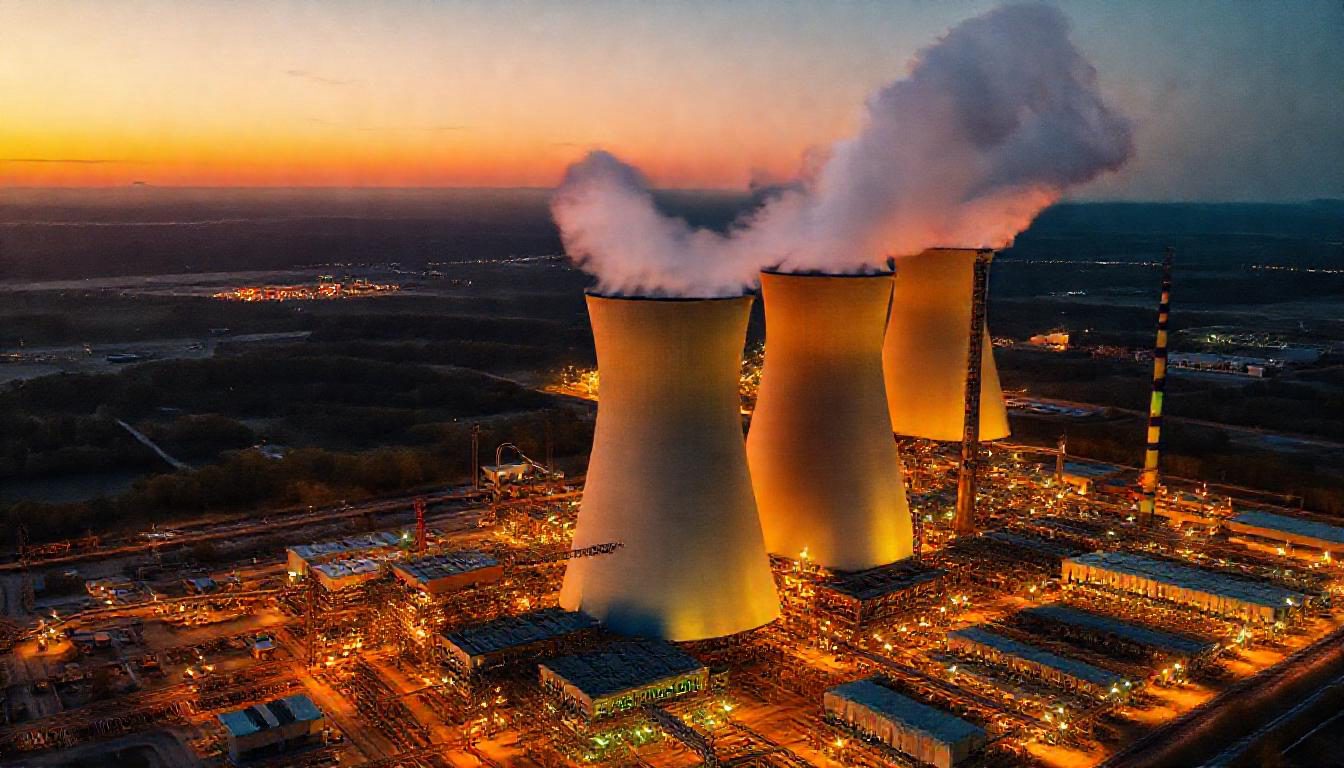
When the most recent Bitcoin halving compressed miner revenues by 50%, the industry faced an existential question: can you sustain a business model that relies on cheap electricity when that electricity is becoming the most expensive input for another boom? The answer, increasingly, is no. In the summer of 2026, a structural shift is underway in the American energy landscape. Publicly traded crypto mining companies are no longer just computing hashes; they are becoming power brokers. By leveraging their secured grid connections and cooling infrastructure, they are bitcoin miners sell power to artificial intelligence data centers, transforming from pure-play speculative assets into diversified energy and compute utilities. This case study examines the economic mechanics behind this pivot and what it signals for U.S. investors. This strategy is known as Texas grid arbitrage.
Bitcoin Miners Sell Power to AI
For years, the thesis for investing in crypto miners was simple: buy the stock, ride the Bitcoin price up, and enjoy the operational leverage. That model broke during the post-halving period. While hash rates—the total computational power mining Bitcoin—reached all-time highs, the cost per terahash continued to climb due to hardware upgrades and rising energy costs. Simultaneously, the block reward declined.
Miners with inefficient fleets or poor energy contracts found themselves operating at a loss. The solution was not to shut down, but to repurpose. High-performance computing (HPC) for AI training runs requires massive amounts of electricity and advanced thermal management. The infrastructure needed for large-scale Bitcoin mining—multi-megawatt substations, liquid cooling capabilities, and redundant power feeds—is nearly identical to what AI centers need.
Crucially, the power deal is the bottleneck for AI growth in the U.S. Tech giants are scrambling for grid access, often waiting years for interconnection queues. Miners who secured these connections during the crypto boom now hold the keys. By offering these connections to AI firms like Microsoft or Amazon Web Services, miners can command higher margins than they could from mining alone.
Texas Grid Arbitrage: Bitcoin Miners Sell Power to AI
Texas remains the epicenter of this transition. The state’s deregulated energy market allows for flexible power purchasing agreements (PPAs) that benefit both miners and AI developers. Consider the operational model of major Texas-based miners who are now pivoting to HPC. They have installed dual-purpose infrastructure: ASIC miners for Bitcoin and GPU clusters for AI workloads.
The economic arbitrage is clear. During periods of high Bitcoin difficulty and low grid prices, they mine. When AI demand spikes and grid prices soar, they throttle down mining and sell the capacity. This flexibility creates a “virtual battery” effect that stabilizes the Texas grid. This is the core of Texas grid arbitrage.
“We are no longer just mining Bitcoin; we are optimizing base-load power. The asset is the energy contract, not the hash rate.”
This shift is visible on the balance sheets. Q2 2026 earnings reports from several S&P 500-listed miners showed a surge in non-minting revenue. Analysts estimate that HPC hosting services now contribute 15–20% of total revenue for leading firms, with projections to exceed 40% by 2027. The capital expenditure required to retrofit cooling systems is recouped within 18 months at current AI compute prices, a significantly faster payback period than waiting for the next Bitcoin bull run.
Read also: Bitcoin vs Ethereum ETF Investing: Which Fits Your Portfolio Now · Solana ETF Launch: A 2026 Case Study for US Investors
Risks and Regulatory Friction
While the pivot offers a survival roadmap, it introduces new risks. First, the execution is complex. Mining ASICs are binary tools; HPC requires sophisticated orchestration software and uptime guarantees. Miners must prove they can meet Service Level Agreements (SLAs) for latency and reliability, standards that AI firms enforce rigorously.
Second, there is the risk of dependency. The crypto market is volatile. If an AI firm cancels a contract due to a change in algorithmic efficiency (e.g., a move to more power-efficient models), miners are left with stranded assets. If they have shuttered their mining fleet to build GPU clusters, they cannot quickly pivot back. They are betting that the AI demand is structural, not cyclical. Given the current trajectory of generative AI adoption, this bet seems sound, but it exposes miners to tech-sector risks rather than just crypto-specific ones.
Regulatory scrutiny is also increasing. The SEC and FERC are monitoring the intersection of crypto and energy. The classification of these facilities is evolving. Are they utilities? Data centers? The tax implications differ. As these facilities blend crypto and AI, the IRS may need to provide clearer guidance on depreciation schedules and energy tax credits.
What U.S. Investors Should Watch
The market is re-pricing these stocks based on their energy contracts, not their Bitcoin holdings. For investors, the traditional correlation between Bitcoin spot price and miner equity prices is decoupling. A miner with a long-term, fixed-rate power deal and a signed HPC contract is more valuable than a miner with a cheap power deal but no AI pipeline.
Key metrics to monitor include:
- Contracted Power Utilization (CPU): What percentage of the facility’s energy capacity is sold ahead of time?
- HPC Revenue Mix: Is the company successfully converting electricity into high-margin compute revenue?
- Grid Interconnection Status: Does the facility have guaranteed access to power without curtailment risks?
Key Takeaways
- The post-halving margin compression has forced U.S. miners to diversify, with bitcoin miners sell power strategies becoming a primary revenue source.
- Texas-based miners are leveraging deregulated energy markets to offer grid flexibility and compute power to AI tech giants.
- Traditional crypto correlation is breaking; stock valuation now depends on energy contracts and HPC execution, not just Bitcoin price.
- Operational risks increase as miners must meet strict AI uptime SLAs, exposing them to standard tech sector volatility.
For official data and guidance on this topic, see Commodity Futures Trading Commission.
FAQ
Why are miners switching to AI hosting?
Mining margins have collapsed due to the halving and high hardware costs, making AI hosting more profitable per megawatt hour.
Is this bad for Bitcoin’s security?
Not necessarily. Miners can still mine during off-peak hours or when grid prices drop, maintaining network security while optimizing profits.
Will this trend continue into 2027?
Yes, as AI compute demand grows and power availability remains constrained, miners with grid access will continue to command premium valuations.


Comments (3)