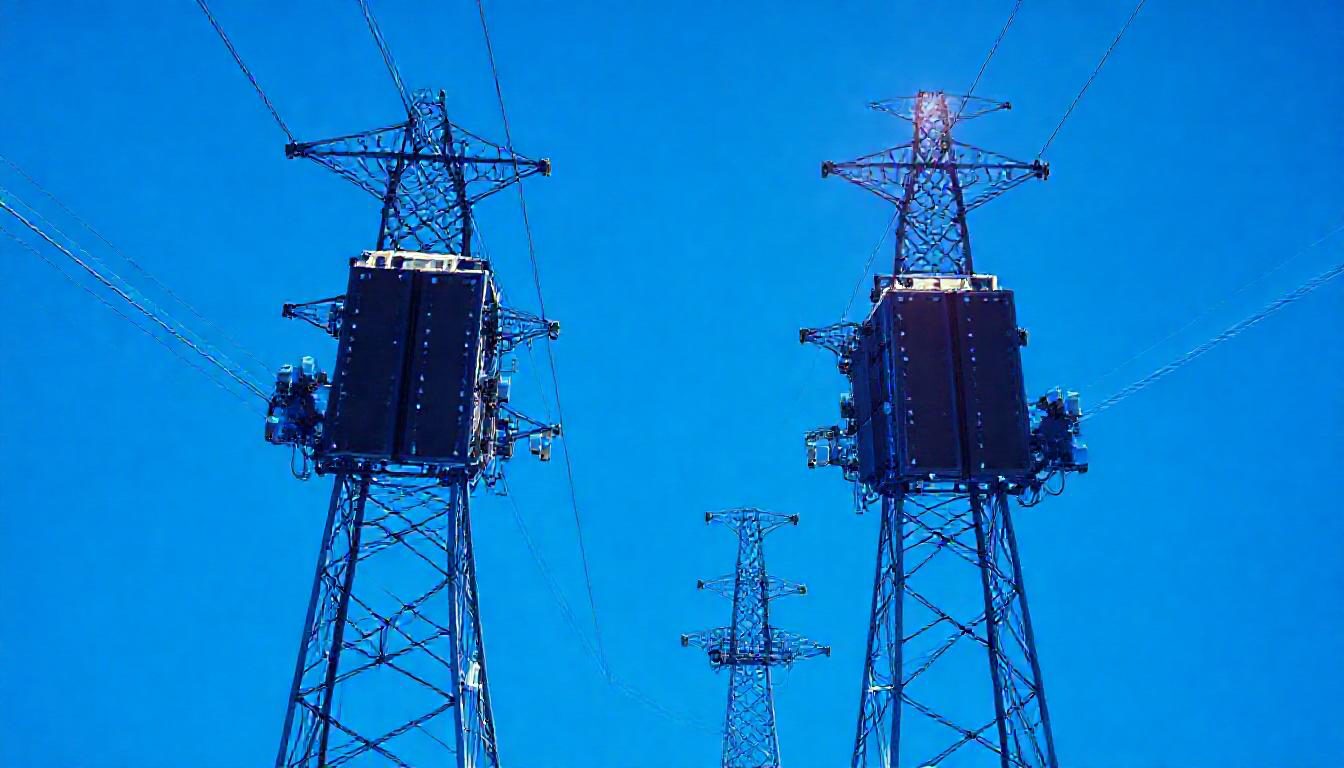
The AI grid power limits have become the single most significant risk factor for technology investors in 2026. While capital flows aggressively into chip designers and GPU manufacturers, a critical oversight remains: the electrical grid cannot support the exponential demand of next-generation data centers. This disconnect between hardware capability and physical infrastructure limits is reshaping the valuation of neocloud providers, forcing a shift from pure computational metrics to energy-secured asset classes.
The AI Grid Power Limits Hit Silicon Valley
For the past three years, the narrative in venture capital and private equity has centered on compute scarcity. There are not enough Nvidia H100 or Blackwell GPUs to go around, so premiums are justified. However, this analysis misses the second constraint. A rack of liquid-cooled AI servers consumes up to 100 kilowatts, five times the density of traditional cloud rows. The U.S. electrical grid, largely built in the 1970s and 1980s, is aging and fragmented. In major hubs like Virginia’s Data Center Alley, interconnection queues have stretched to four years or more. This means that even if an investor funds a new facility today, it may not energize until 2030.
This lag creates a dangerous asymmetry. Hardware depreciates rapidly; a GPU cluster might be obsolete in three years, but its power contract lasts for decades. If the power isn’t available when the hardware arrives, the asset becomes stranded capital. For American investors, the definition of a “neocloud” is shifting. It is no longer just about who has the fastest chips, but who has secured the megawatts to run them. AI grid power limits are now the primary differentiator.
Interconnection Queues as the New Bottleneck
The Federal Energy Regulatory Commission (FERC) estimates that the queue for new large-load projects in PJM Interconnection—the grid serving the mid-Atlantic—now exceeds 600 gigawatts. To put that in perspective, that is more capacity than the entire U.S. grid currently produces. This bottleneck is not a temporary glitch; it is a structural failure of planning.
In Texas, where ERCOT operates independently, the situation is slightly different but equally precarious. While land is cheaper, the grid is prone to extreme weather events and lacks the robust inter-regional transmission lines found in the East. Investors must now weigh regulatory risk against physical risk. A facility in northern Virginia might have reliable weather but four-year wait times for power. A facility in West Texas might have immediate land availability but face curtailment risks during heat waves. Navigating AI grid power limits in these regions requires careful strategic planning.
Why Capacity Clauses Are Now Mandatory
The rise of the “capacity clause” in AI infrastructure contracts is the market’s mechanism for pricing this risk into hardware deals. Historically, cloud providers like AWS or Azure sold compute as a utility. You paid for what you used. In the neocloud model, however, deals are often structured as long-term leases of specific GPU clusters. If a provider cannot deliver the power to run those clusters, they breach the contract.
“We are no longer buying cents per kilowatt-hour; we are buying guaranteed uptime in a world where the grid is increasingly fragile. The premium for energy certainty is now higher than the premium for compute speed.”
These clauses require operators to provide proof of secured power, often through Power Purchase Agreements (PPAs) with nuclear, gas, or renewable sources backed by storage. Without these guarantees, institutional investors are refusing to fund the capex. The era of “build it and they will come” is over. Now, you must prove the lights will stay on before you order the chips. Addressing AI grid power limits is essential for deal closure.
The Rise of On-Site Generation
To bypass interconnection queues, savvy neocloud operators are pivoting to on-site generation. This strategy involves building small modular reactors (SMRs), natural gas turbines, or large-scale solar-plus-storage farms directly adjacent to data centers. While this reduces reliance on the public grid, it introduces new complexities:
- Capital Intensity: Building power generation infrastructure requires significantly more upfront capital than leasing grid capacity.
- Regulatory Hurdles: Obtaining permits for on-site gas turbines or nuclear facilities can take years and faces intense opposition from local communities.
- Operational Risk: Data center operators are not power plants. Managing the maintenance and safety of on-site generation requires a different skill set and workforce.
Despite these challenges, companies like Vantage and Crusoe Energy have successfully implemented this model, particularly in regions with abundant natural gas. This trend suggests that the future of AI infrastructure may look less like centralized cloud farms and more like decentralized energy hubs. Overcoming AI grid power limits is becoming a key competitive advantage.
Read also: Neocloud Fabric Latency: The Margin Killer in AI Hardware Scaling · ASIC vs GPU: Total Cost of Ownership for AI
Impact on U.S. Businesses and Consumers
The ripple effects of AI grid power limits extend far beyond venture capital portfolios. For American businesses, the cost of AI adoption is rising. As neocloud providers pass on the higher costs of securing power and building infrastructure, the price per GPU-hour will likely increase. This creates a barrier to entry for startups that cannot afford premium compute, potentially concentrating AI power in the hands of a few well-capitalized incumbents.
For consumers, the impact is indirect but tangible. Data centers are massive consumers of electricity. In regions where the grid is strained, such as Northern Virginia or Phoenix, the surge in AI data center demand contributes to rising utility rates for residential customers. Politicians are taking notice. In several states, legislators are proposing bills to require data centers to pay for grid upgrades or to limit their usage during peak demand periods. This creates a political risk for tech companies that have long enjoyed subsidized power rates.
Investor Strategy: Diversification Beyond the Chips
For investors looking to capitalize on the AI boom in 2026, focusing solely on semiconductor manufacturers is a flawed strategy. The bottleneck has moved downstream to utilities and infrastructure. Key areas for diversification include:
- Grid Modernization Plays: Companies involved in high-voltage transmission, transformer manufacturing, and smart grid technology.
- Energy Storage: Firms producing lithium-ion and solid-state batteries, as well as those manufacturing inverters and software for grid balancing.
- Nuclear Suppliers: As the demand for 24/7 clean power grows, companies involved in uranium enrichment, reactor components, and SMR development are becoming critical infrastructure partners.
Key Takeaways
- Power is the new scarcity: The limiting factor for AI growth is no longer chip supply, but electrical grid capacity.
- Interconnection delays are structural: Wait times for new data centers in major U.S. hubs now exceed three to four years, forcing a pivot to on-site generation.
- Contractual shifts: “Capacity clauses” requiring proof of secured energy are becoming standard in neocloud deals, impacting valuation models.
- Cost pass-through: American businesses will face higher AI compute costs, while consumers may see utility rate hikes due to grid strain.
- Investment rotation: Capital should flow toward grid infrastructure, energy storage, and nuclear suppliers, not just chip designers.
For official data and guidance on this topic, see Semiconductor Industry Association.
FAQ
How long will it take to solve the AI power crunch?
Experts estimate that significant grid expansion and modernization will take at least five to seven years. In the interim, the market will rely on temporary solutions like battery storage and on-site gas generation, which come with higher costs and regulatory risks.
Will nuclear power be the primary solution for AI data centers?
Nuclear power is a leading candidate due to its ability to provide 24/7 baseload carbon-free energy. However, large-scale nuclear projects face long construction timelines. Small Modular Reactors (SMRs) may play a larger role in the late 2020s, but natural gas and renewables with storage will likely dominate the near-term transition.
How does this affect the price of AI services for startups?
Startups should expect compute costs to remain elevated or increase as providers secure premium power contracts. This may lead to a consolidation in the AI startup space, where only companies with significant capital or strategic partnerships with energy providers can scale effectively.
Are there specific U.S. states that are better for data center investment?
States with abundant renewable energy, favorable regulatory environments, and existing industrial power infrastructure—such as Texas, Ohio, and Georgia—are becoming more attractive than traditional hubs like Virginia and Oregon, primarily due to shorter interconnection times and lower energy costs.

Comments (3)