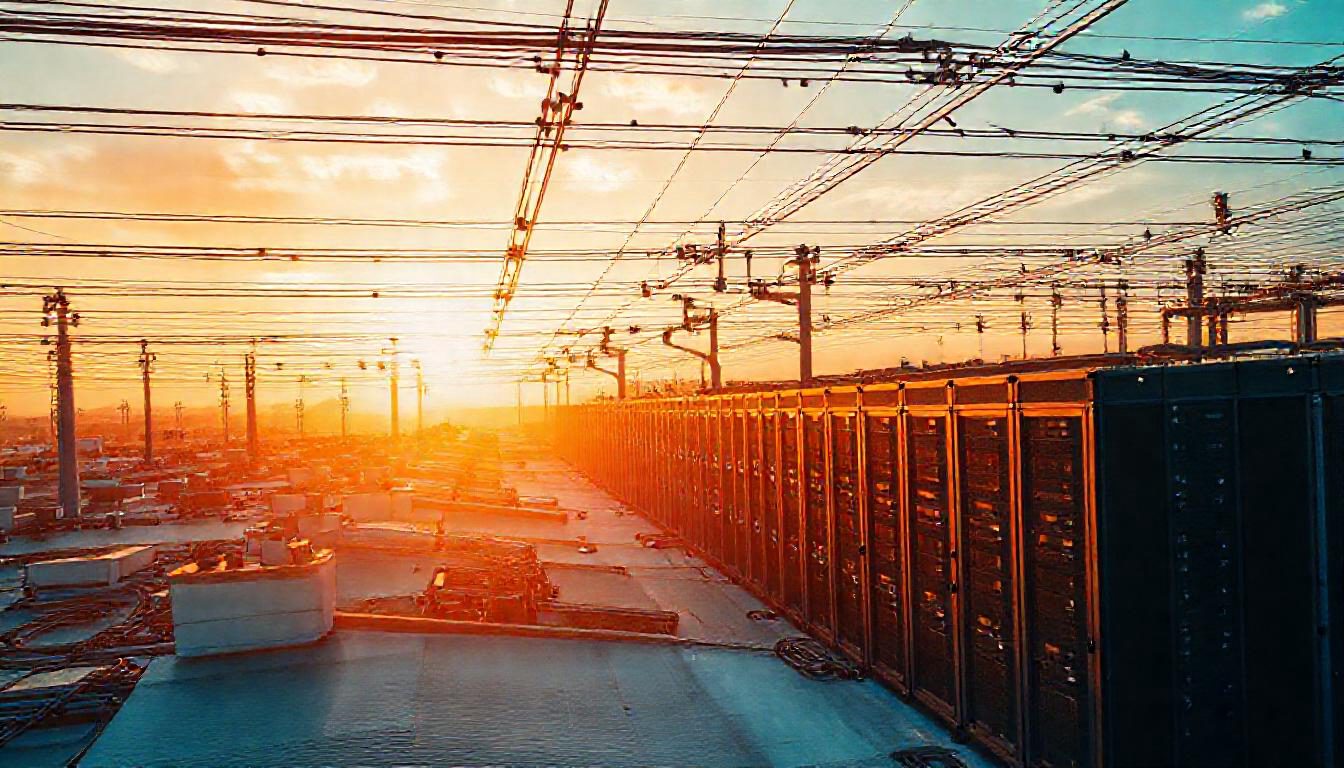
The relationship between cryptocurrency production and the national power grid has fundamentally changed. For years, Bitcoin miners were viewed primarily as flexible loads that could shut down during grid emergencies to stabilize electricity markets. Today, that business model is under severe pressure. As of mid-2026, the dominant narrative around Bitcoin grid revenue is no longer about who can find the cheapest kilowatt-hour to solve cryptographic puzzles, but about who can secure long-term power contracts with artificial intelligence data centers. This pivot is creating a new class of energy assets and forcing institutional investors to rethink exposure to the crypto sector.
Why Bitcoin Grid Revenue Is No Longer Just About Hashrate
The post-halving environment has squeezed margins. With block rewards reduced and network difficulty at historic highs, the cost of producing a single Bitcoin has climbed. Miners are no longer profitable simply by running 24/7. The traditional model of Bitcoin grid revenue relied on arbitrage: buying power when it was cheap and selling compute when network congestion drove fees up. However, the industrial-scale demand from generative AI has disrupted this arbitrage. AI data centers require constant, high-density power and sophisticated cooling infrastructure. They are willing to pay premiums for grid access that miners, often operating on thin margins, historically could not guarantee.
This dynamic has turned many mining facilities into de facto power brokers. Companies like Core Scientific and Applied Digital have begun converting existing mining halls to accommodate high-performance computing clusters. The result is a hybrid model where Bitcoin grid revenue becomes secondary to infrastructure leasing fees. For U.S. entrepreneurs and investors, the implication is clear: the most valuable asset in the crypto mining space is no longer the ASIC miner, but the interconnection queue position at the substation.
The Grid Constrained by AI Demand
Major U.S. markets, including Northern Virginia and Texas, are experiencing grid constraints. AI firms are desperate for power. This scarcity allows miners who own land and grid connections to command higher valuations. The shift is not merely operational; it is financial. Balance sheets are being restructured to reflect stable, long-term cash flows from hosting services rather than volatile spot prices of the underlying token.
How This Shift Affects U.S. Energy Markets
The convergence of crypto and AI infrastructure has profound implications for American energy policy. The Federal Energy Regulatory Commission (FERC) has long debated how to integrate large, variable loads into the grid. The rise of AI data centers has accelerated this debate. Utilities are now facing requests from tech giants for gigawatts of power, often faster than they can build new generation capacity.
“The value of a megawatt-hour is shifting from energy production to location and timing,” says an energy sector analyst tracking utility filings in the PJM Interconnection.
This scarcity premium benefits miners who have already secured power contracts. While the spot market for electricity fluctuates, long-term power purchase agreements (PPAs) with AI firms provide certainty. For Bitcoin grid revenue, this means stability. The volatility of crypto prices remains, but the cost basis of energy is often locked in via these hybrid deals. Investors should note that this model reduces the correlation between Bitcoin price swings and company earnings, potentially making these stocks more attractive to conservative institutional portfolios.
Scenario Analysis: The Future of Mining Facilities
| Feature | Traditional Mining Facility | AI Hosted Mining Facility |
|---|---|---|
| Primary Revenue | Block Rewards & Transaction Fees | Hosting Fees & Power Arbitrage |
| Grid Interaction | Curtailment during peaks | Consistent high-load usage |
| Asset Value | Hardware-dependent | Infrastructure & PPA-dependent |
| Risk Profile | High price volatility | Moderate contract risk |
Read also: Miner-to-AI Power Sales: Crypto Portfolio Impact · Stablecoin Compliance Gaps: 2026 Impact on U.S. Crypto Markets
Key Takeaways
- Bitcoin grid revenue is increasingly decoupled from pure block rewards, shifting toward infrastructure leasing and power management.
- AI data center demand is creating a power scarcity premium, making grid connections more valuable than mining hardware alone.
- U.S. miners are pivoting to hybrid models, stabilizing cash flows and reducing exposure to crypto price volatility.
- Investors should evaluate mining stocks based on their power contracts and location in constrained utility markets, not just hashrate metrics.
For official data and guidance on this topic, see Bank for International Settlements.
FAQ
Why are miners selling power instead of mining Bitcoin?
Because AI data centers pay higher, more stable rates for reliable grid access than miners can earn from volatile block rewards, especially after recent halvings increased production costs.
Does this change the security of the Bitcoin network?
Potentially. If miners prioritize hosting AI servers, they may reduce active hashrate. However, many facilities use a dynamic model where they switch modes based on profitability, maintaining network security while maximizing revenue.
How should U.S. investors evaluate these companies now?
Focus on their power purchase agreements (PPAs) and land grants. The value proposition is now tied to energy infrastructure assets and their ability to secure long-term contracts with tech firms, rather than just crypto price forecasts.


Comments (4)