
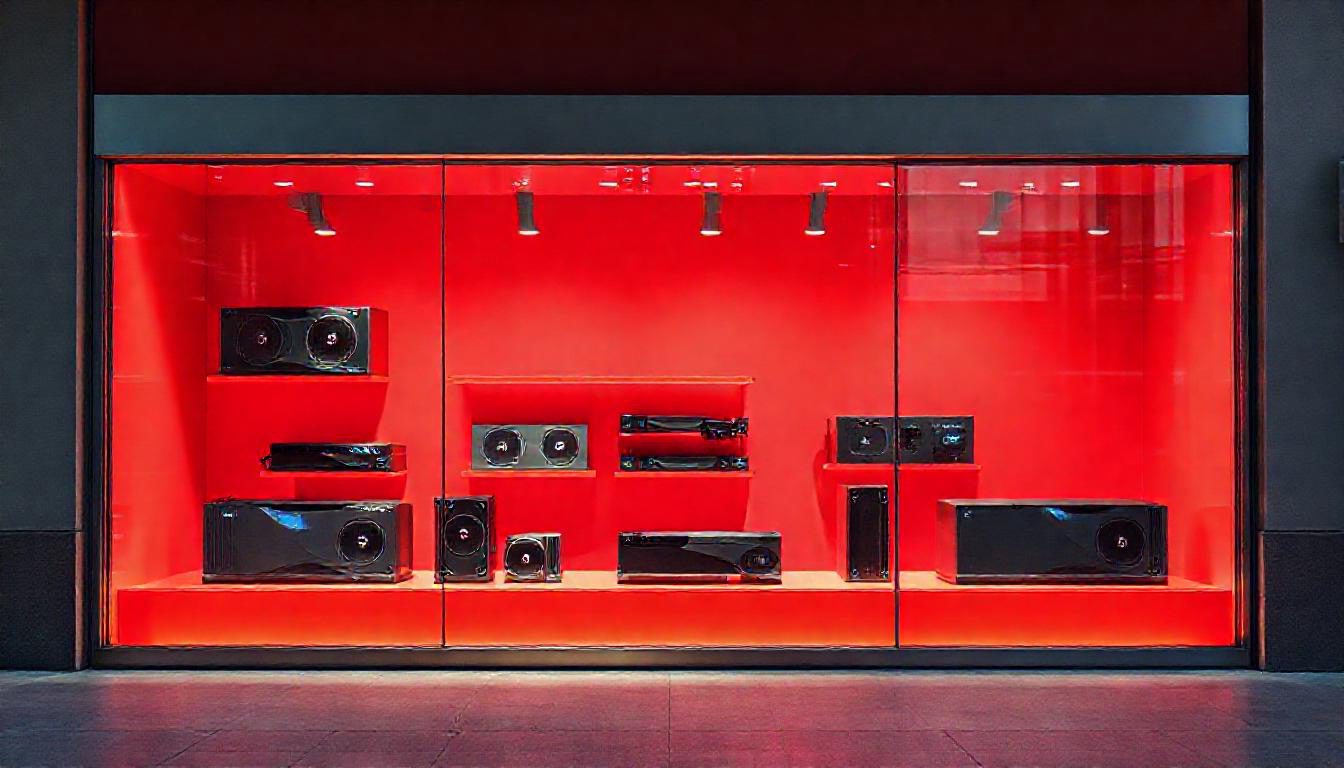
For US AI startups scaling inference workloads, the ScaleAI hardware decision between ASIC and GPU defines infrastructure costs for the next three years. While Nvidia GPUs offer flexibility, custom Application-Specific Integrated Circuits (ASICs) promise superior price-performance ratios for specific algorithms. In August 2026, executives must weigh capital intensity against operational agility as data center demand remains high heading into Q4.
The Case of ScaleAI Hardware
Consider a mid-stage autonomous vehicle firm, referred to here as ScaleAI, that transitioned from Nvidia H100 clusters to silicon from Graphcore and Google TPU. Unlike general-purpose chips, ASICs strip away unnecessary logic to optimize matrix multiplication. ScaleAI projected a 40% reduction in inference latency and a 60% drop in energy costs per query. However, the migration required eighteen months of engineering time. This case highlights the classic tension: hardware efficiency versus software flexibility.
Key Performance Metrics
When evaluating hardware, US founders should track three specific metrics rather than just peak FLOPS. The market shifts rapidly, and raw theoretical performance often misleads early-stage investors.
- Latency per Watt: Critical for real-time applications like robotics.
- Memory Bandwidth: Often the bottleneck for large language models.
- Total Cost of Ownership (TCO): Includes cooling, power, and maintenance.
Financial Implications
ASICs require substantial upfront Non-Recurring Engineering (NRE) costs, often exceeding $50 million for advanced nodes. GPUs, conversely, offer pay-as-you-go scalability via cloud providers. For a startup with under $20 million in ARR, the capital lock-up of custom silicon can be fatal. But for companies processing billions of daily queries, the amortization curve favors ASICs sharply. Wall Street analysts estimate that breaking even takes 24 to 36 months for typical high-volume AI services.
“The hardware is not just a product; it is the business model.”
ASIC vs GPU and the Risks of Vendor Lock-In
Choosing ASICs means betting on a specific architecture. If a new algorithmic breakthrough renders the ScaleAI hardware obsolete, the investment evaporates. GPUs mitigate this risk through CUDA and open-source frameworks. US entrepreneurs must assess platform longevity. With the semiconductor supply chain stabilizing by late 2026, lead times for custom silicon have shortened, yet talent scarcity remains a hurdle. Hiring specialized chip architects is difficult in today’s competitive labor market.
For official data and guidance on this topic, see Semiconductor Industry Association.
Read also: HBM4 Supply Shock: The Next AI Hardware Bottleneck for US Investors · Neocloud Capacity Clause: Lock-In vs. Agility
Key Takeaways
- ASIC vs GPU decisions depend on volume: GPUs for flexibility, ASICs for scale.
- NRE costs for custom silicon require significant capital reserves.
- Energy efficiency improvements justify ASICs only after 12–18 months.
- US startups should model TCO for three years before committing.
- Exit strategies: Buyers often discount proprietary ScaleAI hardware investments.


Comments (1)