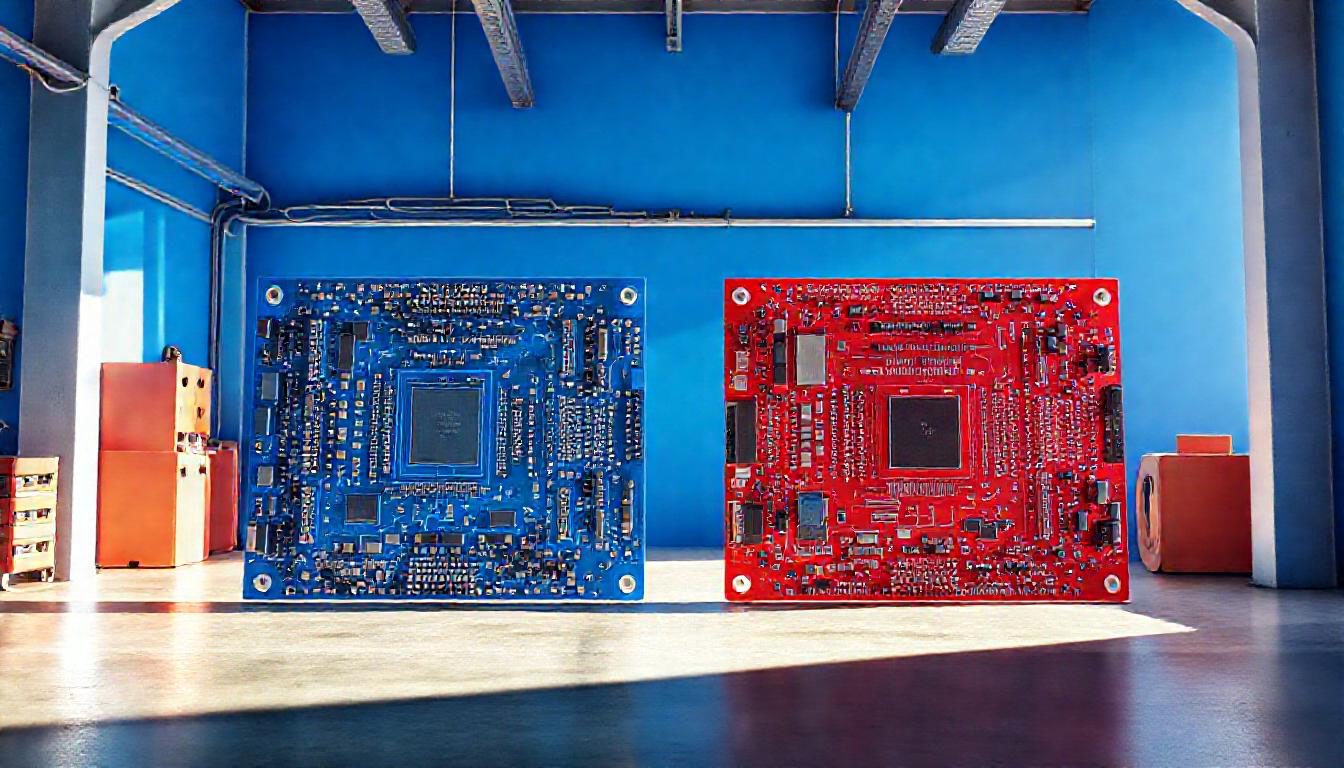
The binary choice facing institutional and retail investors in the semiconductor sector has evolved from “buy AI” to “which Nvidia AMD AI hardware stack offers superior risk-adjusted returns.” While Nvidia remains the undisputed king of the hill, AMD has successfully positioned its Instinct series accelerators as the premier challenger, forcing a re-evaluation of supply chain dependencies and software moats. For U.S. entrepreneurs and fund managers allocating capital this spring, understanding the divergent economic models of these two giants is no longer optional—it is critical for avoiding valuation traps and capturing growth in the next phase of the artificial intelligence hardware cycle.
The Software Moat vs. Open Standards
Nvidia’s primary asset is not its silicon, but its CUDA ecosystem, which creates significant switching costs for developers. This lock-in allows Nvidia to maintain premium pricing power, effectively taxing the industry for access to its optimized libraries. In contrast, AMD has bet on openness, leveraging ROCm and supporting PyTorch as a first-class citizen. This strategy appeals to large tech firms seeking to diversify away from a single vendor risk and to enterprises sensitive to licensing fees.
For investors, the distinction lies in margin durability versus market share capture. Nvidia’s moat protects its gross margins, which remain exceptionally high despite rising competition. AMD’s open-standard approach, however, lowers the barrier to entry for alternative accelerators, potentially eroding Nvidia’s long-term pricing power. The question for the second half of 2026 is whether software compatibility will overcome hardware performance deficits in practical deployment scenarios.

Supply Chain Resilience and Capacity
Hardware availability remains the single largest bottleneck for AI infrastructure build-out. Nvidia relies heavily on TSMC’s advanced nodes and CoWoS packaging technology, a supply chain that has faced capacity constraints in recent quarters. AMD, while also dependent on TSMC, has diversified its back-end assembly and test (OSAT) partners, offering a slightly more resilient supply chain for volume production.
Key Supply Chain Differences
- Packaging Bottlenecks: Nvidia’s use of 2.5D/3D packaging creates a specific choke point that competitors cannot easily replicate, protecting its high-end segments.
- Global Footprint: AMD’s manufacturing flexibility allows it to pivot capacity more rapidly if geopolitical tensions impact specific fab locations.
- Lead Times: Nvidia has historically offered shorter lead times for enterprise customers due to vertically integrated logistics, though this is narrowing.
Investors should monitor inventory turnover ratios and pre-order backlog data. A sudden shift in lead times for AMD chips could signal a successful yield improvement, boosting confidence in its ability to satisfy demand without discounts.
Total Cost of Ownership Dynamics
The narrative has shifted from peak performance to efficiency. While Nvidia’s H100 and successor B-series chips offer superior raw compute, AMD’s MI300 series has gained traction due to its higher memory capacity. For large language model inference, memory bandwidth and capacity are often more critical than raw floating-point operations. This technical advantage translates directly into financial savings for cloud providers, who can fit more models on a single GPU, reducing the total number of accelerators required per rack.
“In the inference era, memory density is the new horsepower, and amenable hardware vendors are winning contracts based on cost-per-token rather than speed-per-test.” — Industry Analyst Estimate
This dynamic favors AMD in the “neocloud” segment, where cost efficiency outweighs the need for the absolute highest-end training capabilities. However, Nvidia’s ecosystem support helps its customers achieve faster time-to-market, which can offset higher hardware costs through accelerated product launch cycles. U.S. startups, in particular, may pay a premium for Nvidia to avoid the R&D hours required to optimize code for AMD’s ROCm stack.
Nvidia AMD AI Market Position and Future Outlook
As we move deeper into the fiscal year, the battle for data center dominance will hinge on power efficiency and thermal management. Nvidia’s Blackwell architecture focuses on extreme performance density, pushing the limits of rack power budgets. AMD’s strategy emphasizes balancing performance with power consumption, a critical factor as data centers face grid constraints in major U.S. hubs like Virginia and Texas.
Investment Implications
- Risk Diversification: Holding positions in both giants hedges against regulatory antitrust actions or technical failures in either ecosystem.
- Secondary Beneficiaries: Suppliers of liquid cooling and high-capacity memory benefit regardless of which chip vendor wins share, as both architectures drive demand for these components.
- Valuation Sensitivity: Nvidia trades at a premium multiple justified by its moat; AMD’s multiple suggests the market expects it to capture significant share, leaving little room for execution errors.
The path forward for the U.S. AI hardware sector is not a zero-sum game in the short term, given the insatiable demand for compute. However, as the market matures, the winner-take-all dynamics of software ecosystems will likely consolidate the hardware landscape into a duopoly, with margins compressing as customers gain leverage.
Key Takeaways
- Ecosystem Lock-in: Nvidia maintains superior pricing power through CUDA, while AMD targets cost-conscious buyers with open standards.
- Memory Advantage: AMD’s higher memory capacity on its Instinct series drives adoption in inference-heavy workloads, offering a compelling total cost of ownership story.
- Supply Chain Resilience: AMD’s diversified assembly partners provide a buffer against packaging bottlenecks that constrain Nvidia.
- Investment Strategy: Diversification across both chipmakers, along with secondary infrastructure plays like cooling and power, offers the most robust exposure to the Nvidia AMD AI hardware trend.
- Future Focus: Power efficiency and grid constraints will become the primary differentiators as rack densities increase in the latter half of the decade.
For official data and guidance on this topic, see Semiconductor Industry Association.
FAQ
Is AMD a viable alternative to Nvidia for AI training?
AMD is increasingly viable for training large models, particularly where memory capacity is a bottleneck, but Nvidia remains the leader for complex, multi-node training due to superior interconnect technologies and software stability.
How do data center power constraints affect Nvidia and AMD?
Both companies face pressure to improve watts-per-TFLOP. Nvidia’s high-density racks require advanced liquid cooling, which can limit deployment speed, whereas AMD’s more balanced power profile may offer easier integration into existing air-cooled facilities.
Should retail investors avoid semiconductor stocks due to volatility?
While volatility is inherent to the sector, long-term growth trends in AI compute are robust. Investors should focus on position sizing and diversification rather than avoiding the sector entirely, as it represents a core driver of U.S. technological competitiveness.




Comments (4)