
The passage of the Federal AI Act in late 2025 has already begun to reorder the capital allocation strategies of U.S. robotics firms, directly impacting robotics venture capital. At the heart of this shift lies the business of neural network actuation—the complex process by which machine learning models translate digital predictions into physical motor commands in the real world. For entrepreneurs and investors, the new regulatory environment transforms actuation from a pure engineering challenge into a critical compliance bottleneck that defines market viability.
Previously, the primary hurdle for autonomous systems was model accuracy. Today, with large language models and specialized computer vision networks widely available on the cloud and at the edge, the binding constraint is safety and transparency. The Act explicitly mandates that any autonomous system operating in public spaces or critical infrastructure must demonstrate robust fail-safes and documented decision-making trails. This moves the needle significantly for companies building humanoid robots, autonomous delivery vehicles, and warehouse automation fleets.
How the Federal AI Act Redefines Robotics Venture Capital Liability
The Federal AI Act introduces a tiered risk framework, and most general-purpose robotics fall into the high-risk category. This classification imposes strict pre-deployment testing standards. Companies can no longer rely on the “move fast and break things” ethos that defined early software development; breaking things in the physical world now invites severe federal penalties and potential negligence lawsuits.
For neural network actuation, this means every command sent to a servo motor, gripper, or wheel drive must be logged, explainable, and constrained by hard-coded safety limits. The regulatory burden falls heavily on the intersection of software and hardware. Firms must prove that their models cannot be easily perturbed into executing dangerous physical actions, a process known as adversarial robustness in actuation.
The Compliance Infrastructure Gap
A critical issue for the U.S. market is the sudden scarcity of infrastructure capable of handling this new compliance load. Most existing robotic operating systems were not architected with federal audit trails in mind. Startups are now forced to retrofit or rebuild their middleware layers to capture the necessary metadata. This technical debt is creating a bifurcation in the market:
- Legacy Incumbents: Large industrial robotics firms like FANUC and ABB have the resources to integrate compliance modules into their existing ecosystems, leveraging their long-standing relationships with enterprise customers who also fear regulatory blowback.
- Agile Startups: New entrants are designing “compliance-first” stacks from the ground up, targeting niche verticals like healthcare logistics or agricultural automation where the ability to certify safety quickly is a competitive moat.
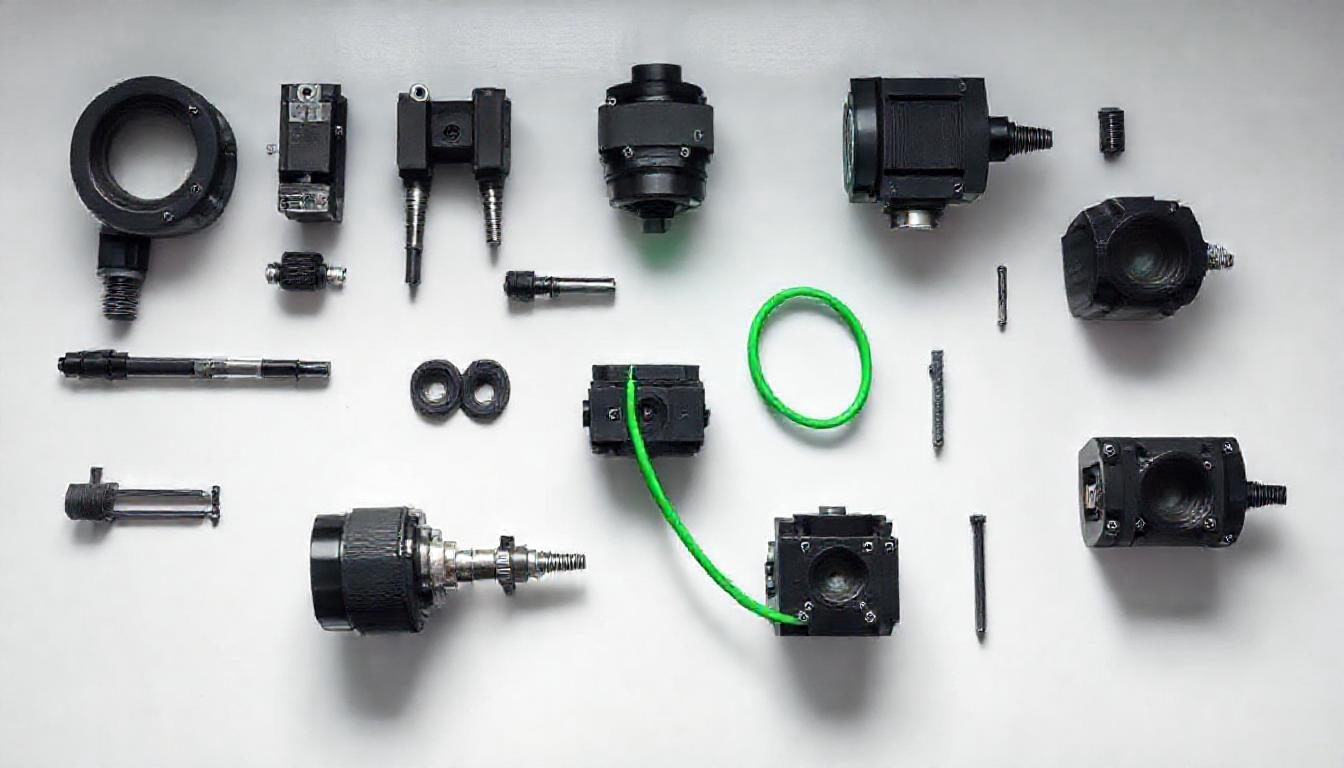
Operational Costs of Neural Network Actuation
Investors are closely scrutinizing the capital expenditures required to maintain compliance. The cost of inference has been dropping, but the cost of verified actuation is rising. To meet the Act’s standards, companies are deploying redundant systems—often running a lightweight, rule-based safety monitor alongside the primary neural network. If the neural network suggests an action that violates the rule-based constraints, the system halts.
This dual-process architecture increases computational overhead on edge devices. U.S. manufacturers are seeing a corresponding rise in demand for specialized edge accelerators that can handle these safety checks without impacting latency. The race is now to find hardware that balances high-performance inference with the low-power execution required for real-time safety monitoring.
“The bottleneck is no longer training the model to pick up a cup; it’s proving to a regulator that the model will never crush the cup, nor the fingers of the person holding it.”
Key Hurdles for U.S. Robotics Firms
The practical implications for American CEOs and CTOs are immediate and multifaceted. Compliance is not a one-time launch event but an ongoing operational license. Firms must establish continuous monitoring pipelines that detect model drift in production. If a robot’s neural network begins to deviate from its training parameters due to environmental changes—such as lighting shifts in a warehouse or wear on mechanical joints—the system must be re-certified.
This dynamic requires a new class of talent: the compliance engineer. These professionals sit between data science and legal, translating regulatory codes into executable safety constraints. The talent war for these hybrid roles has already driven up headcount costs in major tech hubs like San Francisco, Boston, and Austin.
| Factor | Pre-Act Norms | Post-Act Reality |
|---|---|---|
| Deployment Speed | Agile, frequent updates | Gated, audit-heavy release cycles |
| Data Retention | Minimal for ops | Extensive for liability defense |
| Architecture | Single-model focus | Redundant safety-in-loop design |
| Talent Needs | Data Scientists | Compliance Engineers & Safety Architects |
Read also: Neural Network Deployment: A 2026 Guide to Enterprise AI Integration · Neural Network Routing: LLM vs. MoE Efficiency
Strategic Pivots for Robotics Venture Capital
For VCs, the Federal AI Act has shifted the due diligence checklist. Pure-play software is out; vertical integration is in. Investors are looking for robotics companies that control the hardware stack, allowing them to certify the safety of the entire actuation pipeline. Relying on third-party components introduces liability exposure that most allocation committees are now unwilling to touch.
Furthermore, there is a strategic pivot toward ‘white-box’ neural networks. While black-box large models offer superior performance, they are notoriously difficult to explain. The Act favors interpretability. Consequently, capital is flowing toward research into state-space models and other architectures that offer transparency without sacrificing all performance.
Key Takeaways
- Compliance is the new differentiator: The Federal AI Act transforms regulatory adherence from a cost center into a competitive advantage for U.S. robotics firms.
- Hybrid architectures dominate: The era of single-model actuation is over; redundant safety layers and rule-based monitors are now standard requirements.
- Talent market shifts: Demand for compliance engineers who bridge legal and technical domains has spiked, driving up headcount budgets in tech hubs.
- VC strategy adjusts: Investors are favoring vertically integrated hardware-software stacks that offer full control over the actuation pipeline to minimize liability.
For official data and guidance on this topic, see arXiv.
FAQ
What is neural network actuation?
It is the process where a machine learning model’s digital output is translated into standard physical commands for hardware, such as moving a robot’s arm or adjusting a vehicle’s steering.
How does the Federal AI Act impact robotics venture capital?
The Act mandates strict safety testing, audit trails, and real-time monitoring for high-risk autonomous systems, preventing companies from deploying robots without proving their decision-making processes are safe and transparent.
What is the difference between a ‘black box’ and ‘white box’ model in this context?
A ‘black box’ model is hard to interpret, making it difficult to explain why a robot took a specific action. A ‘white box’ model is transparent, allowing regulators and engineers to trace the logic, which is preferred under the new Act.



Comments (1)